Real estate lead generation: sources that bring viewings
Real estate lead generation that you can measure: where leads come from, what makes buyers write from a listing and how to keep the sources that pay.
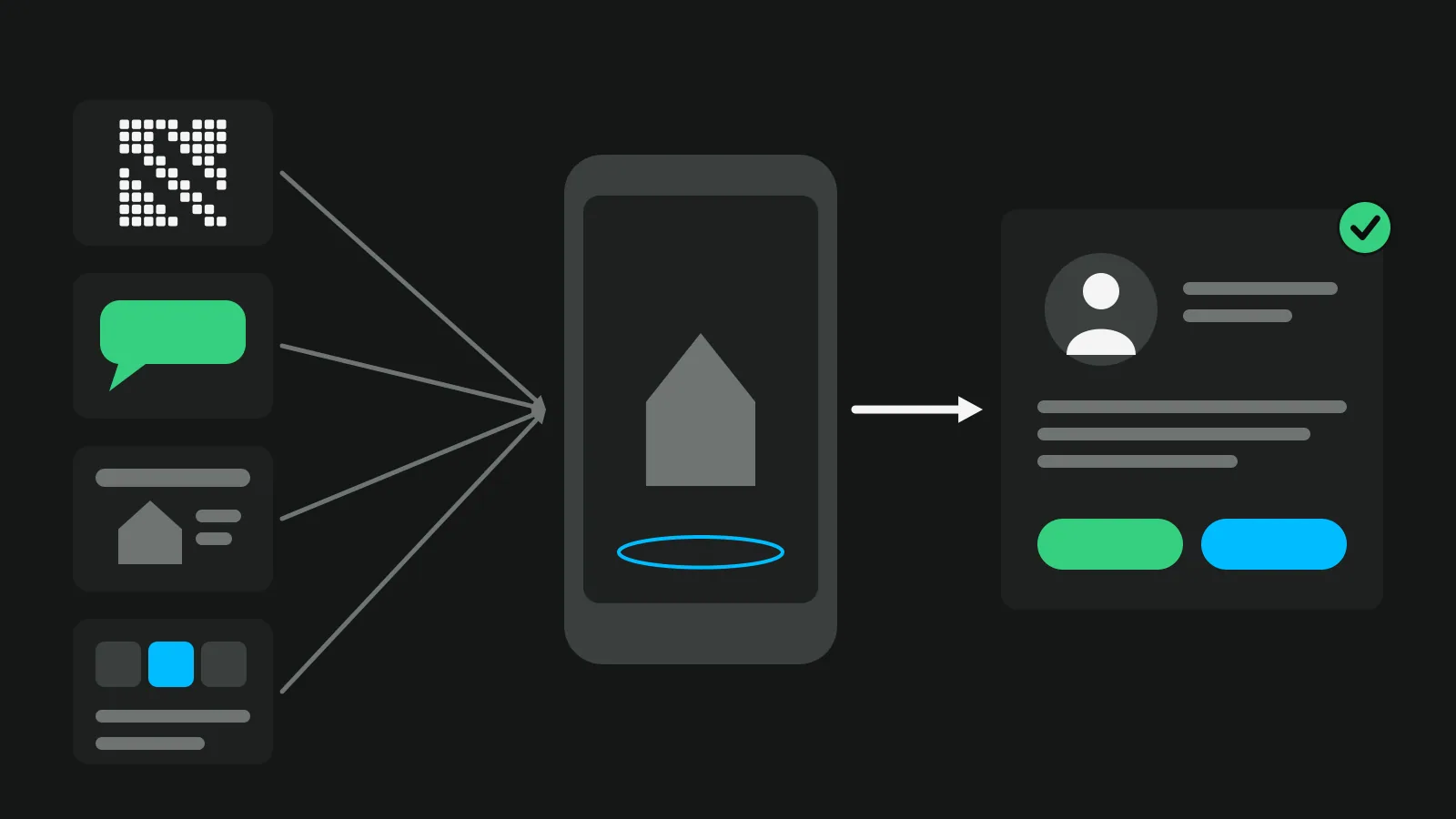
Real estate lead generation is the work of getting people who may buy, sell or rent to leave you their contact, and for most agents it starts with the listings and the clients they already have. New channels help, but only once you know which of your current sources bring viewings and which only bring clicks.
This guide gives you three things: the main real estate lead sources and what each brings, what makes a buyer write to you from a listing, and a simple way to tell which source deserves your money next month.
Where real estate leads come from
Real estate lead sources fall into a short list. What matters is not how many you use but whether you can measure each one.
| Source | Brings mostly | Costs mostly | How to measure it |
|---|---|---|---|
| Past clients and referrals | Sellers and buyers who already trust you | Time: calls, a yearly check-in | Ask every new client how they heard of you and write it down |
| Your listings (portal ads, sign and window QR codes, the tour link you share) | Buyers and tenants for that home, and future sellers who watch how you market | The listing work you already do | A different tagged link per place (see below) |
| Portals' own lead products | Buyers who enquire on the portal | A monthly fee or a price per lead | Leads and viewings per month against the fee |
| Your website and Google Business Profile | People searching your name or your area | Time to keep them current | Visits and contacts from search |
| Social media | Buyers who follow local homes, some sellers | Time, sometimes ad spend | One tagged link per post or campaign |
| Open houses | Local buyers and neighbours thinking of selling | A weekend afternoon | Sign-ins that turn into viewings or valuations |
| Paid ads | Whoever you target | The ad budget | Cost per contact and per viewing |
| Bought leads | Contacts collected by someone else | A price per lead | Viewings per lead bought, and whether consent names you |
The people who know you still come first. In NAR's 2025 survey of US buyers and sellers, 43% of buyers used an agent they found through a referral and 18% one they had worked with before; 66% of sellers found their agent through a referral or used a past agent (summary by Virginia REALTORS, 8 December 2025). Online matters more each year, though: Zillow's 2025 report found that 36% of sellers now find their agent through online channels, against 15% in 2018. Both are US surveys.
Three channels have their own guides: Google Business Profile for agents, QR codes on signs and window cards and social media posts that bring enquiries.
One listing brings buyers today and sellers tomorrow
A listing works on two audiences at once. Buyer and tenant leads write to you about that home. Seller leads watch how you market other people's homes before they pick an agent for theirs.
The same Zillow report puts numbers on the second group: 78% of sellers were more likely to hire agents who offer high-resolution photography, and 75% agents who provide virtual tours and interactive floor plans. So the effort you put into each listing is also your shop window for the next instruction.
Winning sellers is its own job, with farming, past clients and the listing appointment. It has its own guide: how to get real estate listings. The rest of this article stays with the enquiries a listing brings.
What makes a buyer leave a contact on a listing
Most buyers read a listing and leave without writing. They write when the listing has answered enough to make them want a viewing, and when writing takes seconds.
Answer the questions that stop them
Price, size, number of bedrooms and bathrooms, parking, outside space, a floor plan and a photo of every room. A missing fact either sends the buyer to the next listing or produces a vague message ("is it still available?") that is hard to turn into a viewing. Our guides on writing the listing description and making a floor plan cover both.
Let them look round first
A 360 tour or a walk-through video lets a buyer decide before writing. The people who write after looking round already know which room they want to ask about, which makes the first conversation shorter and more useful to both of you.
One way to get in touch, visible on a phone
Most listings are read on a phone. Keep one contact button on screen while they scroll: call, message, email or a form. Give them a reason to press it, such as "Book a viewing" or "Ask about this room", rather than a generic "Contact".
Ask little, and say what you will do with it
A name and a phone number or email are enough. Add a short privacy notice. If you want to send other homes later, ask for that with its own box, left unticked: the GDPR says that "silence, pre-ticked boxes or inactivity should not therefore constitute consent" (recital 32). What you may send afterwards is covered in real estate lead follow up.
Every Vistura tour carries an agent card and a contact form on every plan: the buyer calls, opens WhatsApp, emails or fills in the form in one tap. The form can have your own fields, a link to your own privacy policy, and an optional box, unticked by default, that reads "I would like to receive news about other properties from" followed by your name. On Pro, "Viewing bookings" lets the buyer pick a free time in your calendar and get a confirmation by email with a calendar file.
Give every listing link its own source
"The portal" and "Instagram" are guesses until each place has its own link. If the same link sits on three portals, a sign and your posts, every visit looks the same and you cannot tell which one sent the buyer who booked.
How to tag your links
- List every place a listing appears: each portal, the sign's QR code, the window card, each social post, your email newsletter.
- Give each place its own link. Add tags to the end of the address. Google's Analytics help defines utm_source as the referrer, utm_medium as the marketing medium and utm_campaign as the product, slogan or promo. For example:
?utm_source=rightmove&utm_medium=portal. - Use the right link in the right place. Where your portal has a field for a tour or video link, paste that portal's link there. Check your portal's help pages for what the field takes.
- Keep a one-line list of the tags you use, so "instagram" does not become "Instagram" and "ig" in three months.
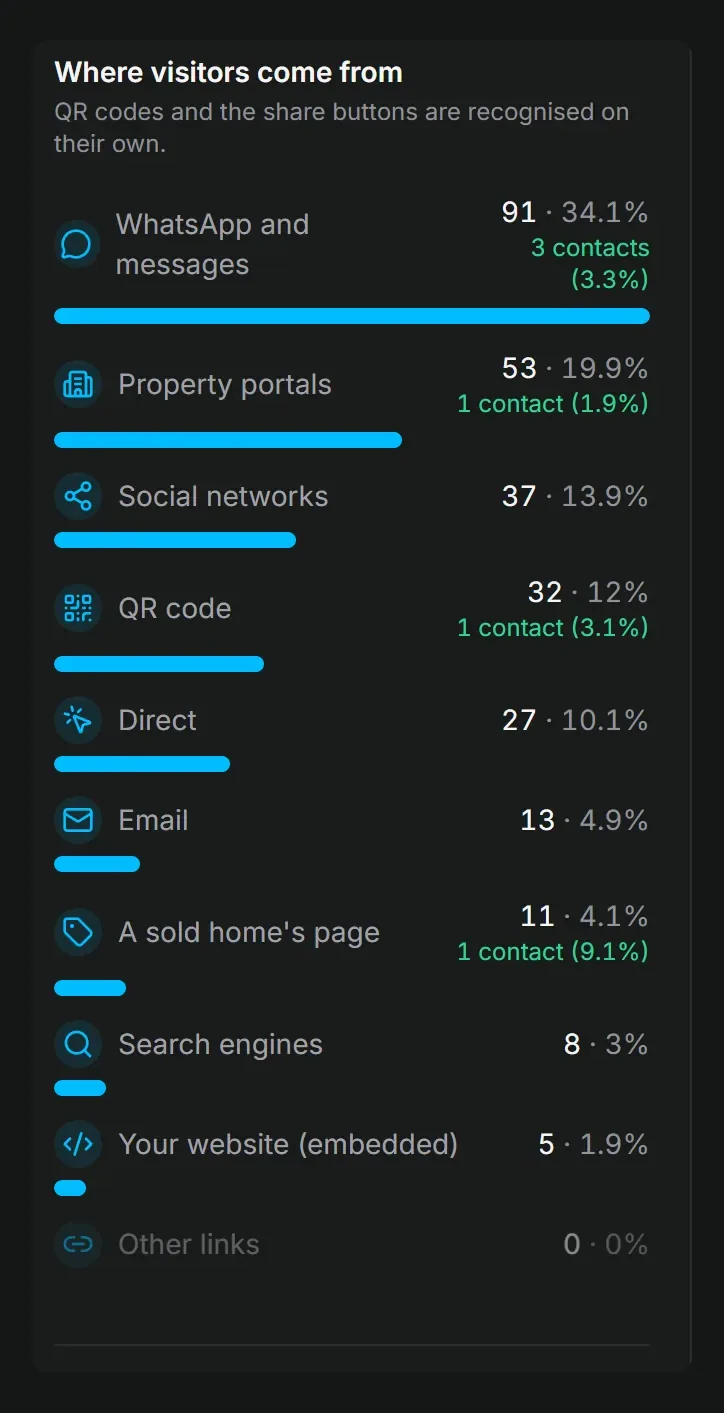
Vistura does most of this for you. QR codes and the share buttons are recognised as sources on their own, and "Link for portals" gives you one tagged link per portal. Every plan shows visits and contacts per tour and the share of visits that became contacts. On Pro, "Where visitors come from" splits visits and contacts by source (QR code, WhatsApp and messages, social networks, property portals, email, search engines, your website), the "By portal" view shows each portal apart, and campaigns from utm_campaign appear by name. A sold tour's link keeps working too: it says the home sold, asks "Looking for something similar?" and, with your public profile, shows your other homes for sale; on Pro, "A sold home's page" in "Where visitors come from" shows how many visits your old listings still send.
Reply before they move on
Speed decides more leads than any channel. Zillow found that 47% of buyers hired the first agent they spoke with, and that 50% of buyers who used an agent prefer texting or messaging apps against 33% who prefer phone calls. So the first reply should be fast and, for many buyers, a message rather than a call. The first five minutes and a 14-day plan are in real estate lead follow up.
In the US there is one more step between a buyer lead and a showing. Since the NAR practice changes took effect on 17 August 2024, a buyer signs a written agreement with their agent before touring a home, in person or by live virtual tour; speaking to an agent at an open house does not need one. So your first reply to a US buyer also prepares that conversation. For self-guided online tours, ask your broker or MLS how they apply the rule.
With Vistura, every lead arrives in full by email on every plan, with "Reply on WhatsApp", "Call" and "Email" buttons. On Pro you also get an alert on your phone or computer within seconds, and "Before getting in touch" shows where the person came from, how long they spent in the tour and in each room, and which rooms they liked. Every new account starts with 14 days of Pro, no card needed: see the plans.
Paying for leads: five questions before you spend
Portals, lead sellers and ad platforms will all offer you more leads. Ask these before you sign:
- What exactly do I get? A contact, an exclusive contact, or a call put through to you?
- Who else gets the same lead? A lead sent to five agents is a race, and the Zillow figure above says the first one often wins.
- How was consent collected, and does it name me? In the UK, the ICO says people on a bought-in list "must have given valid consent to receive marketing from you", that the consent must have "named your organisation (not just 'trusted partners' or similar)", and that you must not use the soft opt-in on a bought-in list. In other countries, check with your regulator, and check the rules where you work before you text or call bought leads.
- What will a viewing cost me, not a lead? Ask the seller for what their leads turn into, then test it against your own numbers.
- Can I stop any month? A source you cannot drop is a source you cannot judge.
Keep the sources that bring viewings
Once every place has its own link, a monthly review takes twenty minutes. Fill in a table like this one for each source:
| Source | Visits | Contacts | Contact rate | Viewings | Cost | Cost per viewing |
|---|---|---|---|---|---|---|
| Portal A | ||||||
| Portal B | ||||||
| Sign and window QR codes | ||||||
| Social posts | ||||||
| Referrals |
Four rules make the table useful:
- Compare by viewings and offers, not clicks. A source that sends many visits and no viewings is noise.
- Read it monthly. Weekly numbers jump around; quarterly is too slow to stop a bad spend.
- Compare a source with itself over time. We found no published benchmark for contact rates that you could hold your own against, so your own last three months are the baseline.
- Fix or drop the bottom source before you add a new one. More channels with the same leaks bring more of the same.
Reading one listing's numbers week by week after launch is a different job, covered in the real estate marketing plan. Wherever your contacts end up, keep them in one place; our guide to a real estate CRM compares the options.
Where to start this week
- Write down every source you use today, paid and free.
- Give each place a listing appears its own tagged link.
- Check that every live listing answers price, size, rooms, floor plan and photos, and has one contact button visible on a phone.
- Set up alerts so no lead waits for hours.
- Put a 20-minute source review in your calendar for the first Monday of each month.
Frequently asked questions
What is the best lead source for a real estate agent?
For most agents it is the people who already know them. In NAR's 2025 survey of US buyers and sellers, most found their agent through a referral or had used that agent before. After that, the best source is the one that brings you viewings at the lowest cost in your own numbers, not the one with the most clicks.
Is it worth buying real estate leads?
Only once you know what a viewing costs you from the sources you already have, so you can compare. Ask the seller whether the lead is shared with other agents and how consent was collected. In the UK, consent on a bought-in list has to name your business.
How can I get more enquiries from my listings without spending more?
Fill the gaps that make buyers leave (price, size, floor plan, photos of every room), let them look round with a tour or video, keep one contact button visible on a phone and ask only for a name and a phone number or email.
How do I know which portal brings my best leads?
Give each portal its own tagged link, then count viewings per portal every month. The portal that sends the most visits is not always the one that sends the people who book.