Real estate business cards: what goes on one, and the QR
What to put on real estate business cards: the details, your state's licence rules, a QR code that keeps working after the sale, and print vs digital.
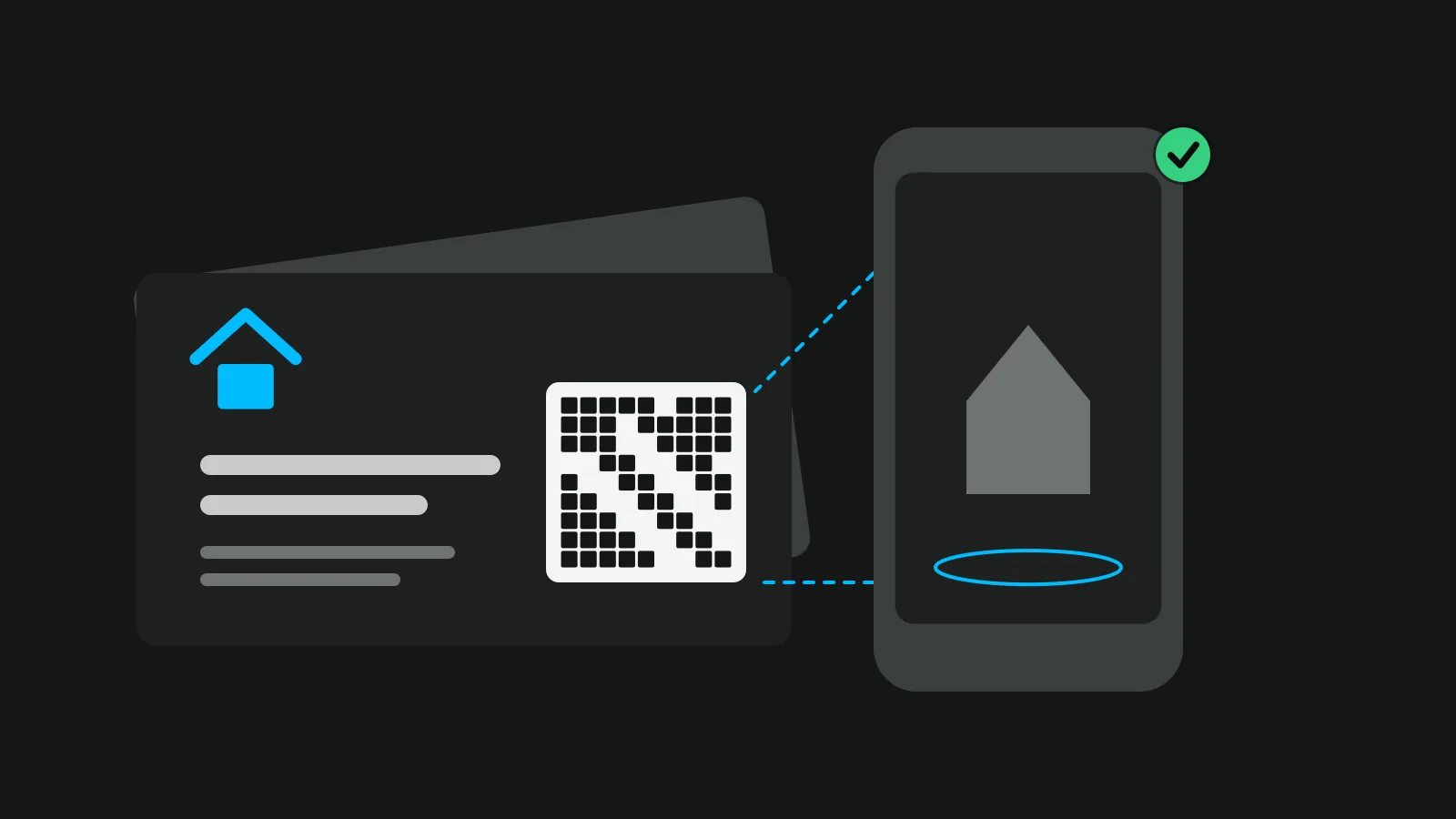
Real estate business cards still earn their place when they do one job: the person who keeps yours can save your number or see your homes in a few seconds. Put your name as licensed, your brokerage, one phone number, one email and one link or QR code on it, check what your state or country requires, and make sure the QR code still works after the home sells.
A card is one small part of how you market yourself; the real estate marketing plan covers the rest. Here is what goes on the card, the rules, the QR code and the choice between print and digital.
What goes on a real estate business card
| Item | Why | Note |
|---|---|---|
| Your name as licensed | It is the name your licence number belongs to | Use the name on your licence, not a nickname |
| Your title | Tells people what you do | Only what your licence and membership allow; "REALTOR®" is for NAR members (see below) |
| Brokerage name and logo | Many rules put the broker on the card | Texas and California both do, in different ways |
| One mobile number | The number people will actually call or message | One is enough |
| One email | For people who prefer to write | A work address, not a personal one |
| One link or QR code | Lets people see your homes | A page that lists your homes beats a social handle |
| Licence number | Required in some places | California yes, Texas no (see below) |
| Photo | Helps people remember who gave them the card | Optional; useful at open houses and on doorsteps; keep it current |
Leave out your home address, a second and third phone number, every social network you are on and slogans you cannot prove. Our guide to the real estate agent bio explains which claims you may make.
Use the back. Put the QR code there with one line that says what it opens, such as "Scan to see my homes", or leave space to write a note by hand. For logo files and formats, see the real estate logo guide.
What your state (and your country) may require
This is not legal advice; check with your regulator and your broker. The rules below were read on 12 November 2026.
California. Regulation 10 CCR 2773 says a licensee "shall disclose its, his or her eight (8) digit real estate license identification number" and the "responsible broker's name as currently licensed" on "solicitation materials intended to be the first point of contact with consumers". The first item on that list is "Business cards". The number must be in type "no smaller than the smallest size type used" on the material.
Texas. The Texas Real Estate Commission's FAQ counts "business stationery, business cards, displays, signs and billboards" as advertising. When an agent's or team's name appears, "the broker's name must also be present (in at least half the size)". A logo with the broker's name counts only if "the broker's name itself (not the whole logo)" meets that size. Is a licence number required on advertising? TREC's answer is "No". It also says it does not consider URLs or email addresses to be advertisements in and of themselves.
NAR members. The membership marks manual says the mark "must appear in all capital letters and be set off from the member's name by punctuation", and must never be used with a descriptive term. A non-member is "never permitted to use the term REALTOR® or REALTOR-ASSOCIATE® adjacent to his name on a business card". As NAR puts it, "only members of NAR can call themselves a REALTOR®".
Outside the US. Agents in Europe read different texts:
| Country | What the official text says | Source |
|---|---|---|
| France | On all professional documents and correspondence: the number and place of issue of the carte professionnelle, the name or company name, address and activity, and the guarantor's name and address where there is one. An agent commercial must say so in any advertising. | Décret 72-678, art. 92; Loi Hoguet, art. 6-2 |
| Spain (Catalonia) | Registration is compulsory; the register's badge carries a unique number to show "en el material de papelería" and in any advertising. | Generalitat de Catalunya |
| Portugal | Mediation companies show their name and licence number in correspondence, publications, advertising and all their external activity. | Lei 15/2013, art. 13 (2013 text) |
| Netherlands | NVM members may use the NVM mark on "visitekaartjes", subordinate to and never larger than their own logo or name. | NVM membership rules 2024, art. 6a |
| Italy | No rule found that names the business card; forms must carry the firm's REA number and tax code, and the agent carries a personal card (tessera). | Camera di Commercio di Salerno |
| Germany | No rule found that names the business card (ask your IHK); the website your QR code opens needs an Impressum, including the supervising authority where the activity needs a licence. | § 5 DDG |
Every other US state sets its own rules. Check your state's real estate commission before you print 500 cards.
The QR code on your business card
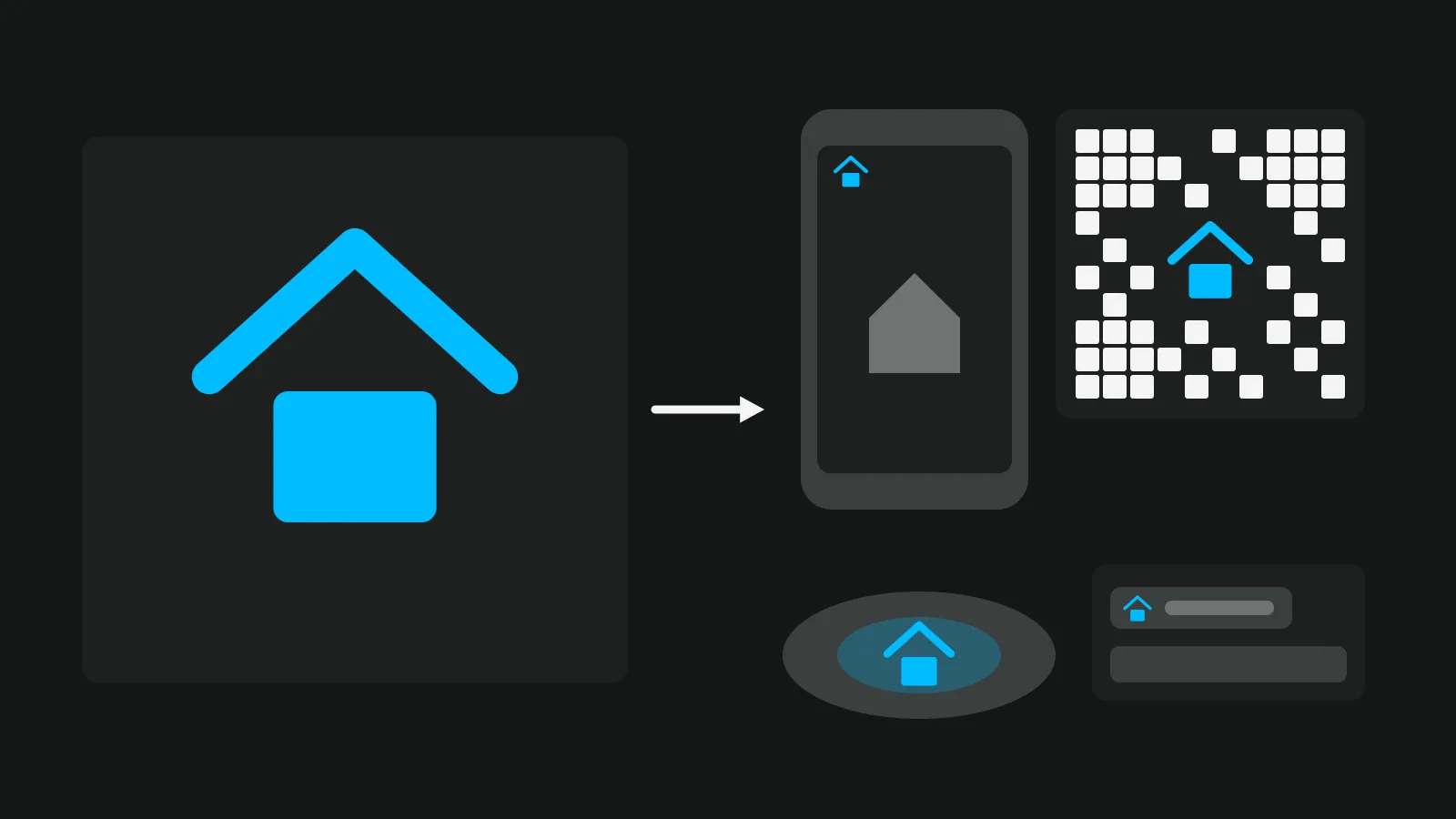
A real estate business card QR code is only as good as what it opens. There are three sensible choices:
| The code opens | Best for | Watch out for |
|---|---|---|
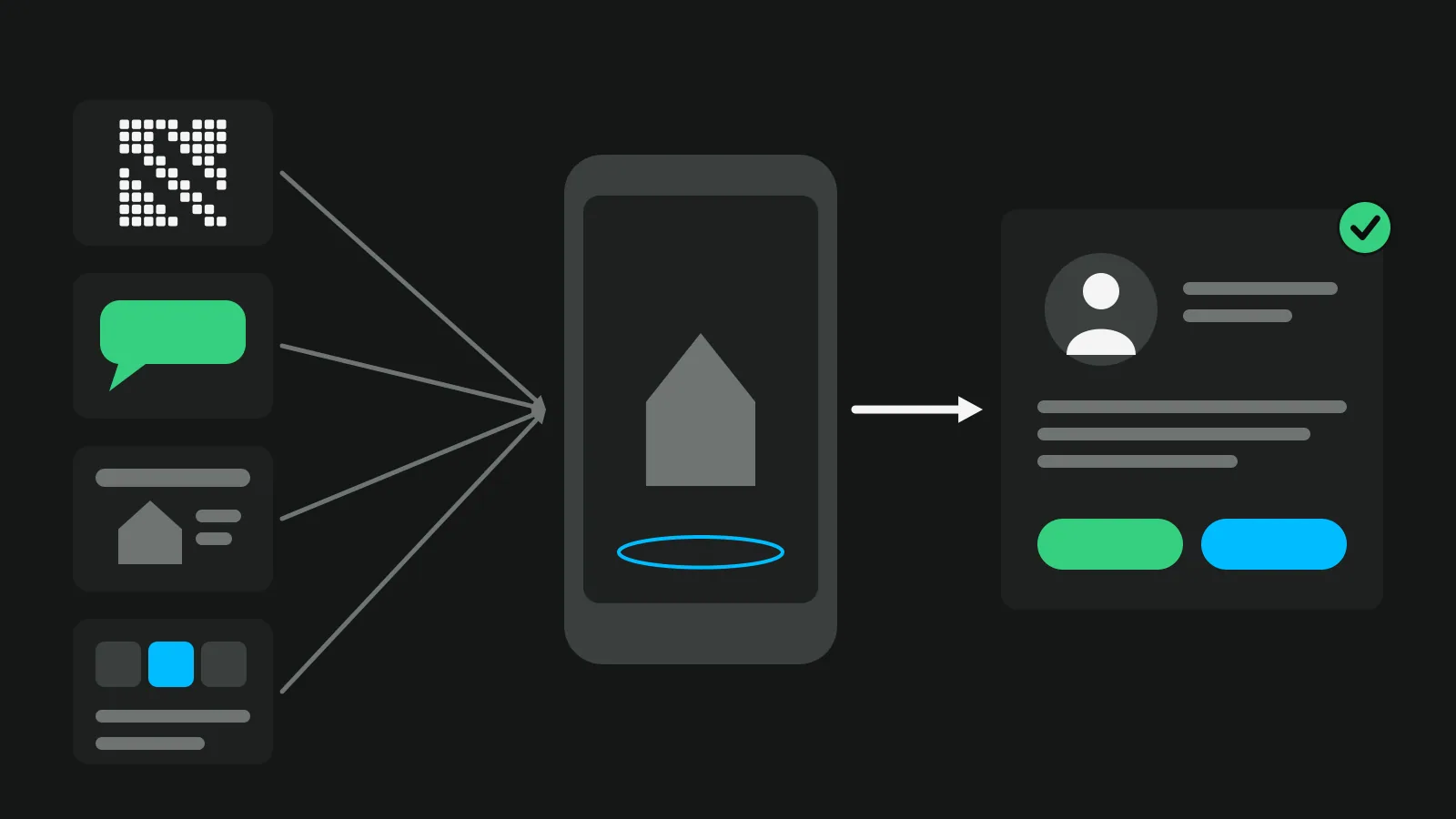
| A contact card (vCard) | Networking events: the phone offers to save your name, agency, phone, email and website | Denser code, so print it larger; it cannot be updated after printing |
| Your profile page, with your contact and your homes | The default for a card that stays in a wallet for months | Keep the page online; its content changes, the code does not |
| One listing's tour | Cards handed out at that home's open house | Check what it shows after the sale (see below) |
Three points decide whether it scans:
- Size. A rule of thumb is that the code is at least a tenth of the distance it is read from. A card held 25 to 30 cm from the phone needs a code of about 2.5 to 3 cm (1 to 1.2 in). The back of a card has room for that; the front usually does not. A contact-card code holds more data, so go larger or use a link instead.
- Static or dynamic. A static code holds your link and never expires. A dynamic code forwards through a service and works only while that service does; some stop when a trial ends. For a card, a static code that opens a page you control is the safer choice.
- Test. Scan the printed proof with two phones, an iPhone and an Android, at arm's length before you order the batch.
QR codes on signs, window cards and flyers follow other sizes and placements; see QR codes for real estate signs.
The free real estate QR code generator makes either kind: a "Contact card" code (Name, Agency, Phone, Email, Website), which phones offer to save, or a "Link" code to any page, such as your profile. You download a PNG at 300 dpi or an SVG for the printer, with your logo in the middle if you want and a contrast check. There is no account, and the code is static, so it never expires.
Design details printers ask for
- Size. The US card is 3.5 x 2 in (89 x 51 mm); much of Europe uses 85 x 55 mm. Printers differ slightly, so start from your printer's template.
- Bleed and safe area. Printers commonly ask for about 1/8 in (3 mm) of bleed on each side, with text kept inside a safe margin. Check your printer's spec.
- Resolution. 300 dpi at the final size, or a vector file for the logo and the QR code.
- Contrast. Dark code on a light background, with a clear margin around it. Do not print the code over a photo.
- Type size. Your phone number is the line people need most. Print a proof and ask a colleague to read it at arm's length without glasses.
Print or digital?
Paper still works where you meet people in person: open houses, door-knocking, the local café that lets you leave a few on the counter.
There are also good ways to pass on your details without paper:
- Show your contact-card QR code on your phone screen and let the other person scan it.
- NameDrop on iPhone. Holding two iPhones close shares only your name, the phone number or email address you choose and your Contact Poster. Both phones need iOS 17.1 or later.
- A link to your profile in your email signature and your WhatsApp profile.
You can do both: a printed card for the handshake, a digital link for everyone else.
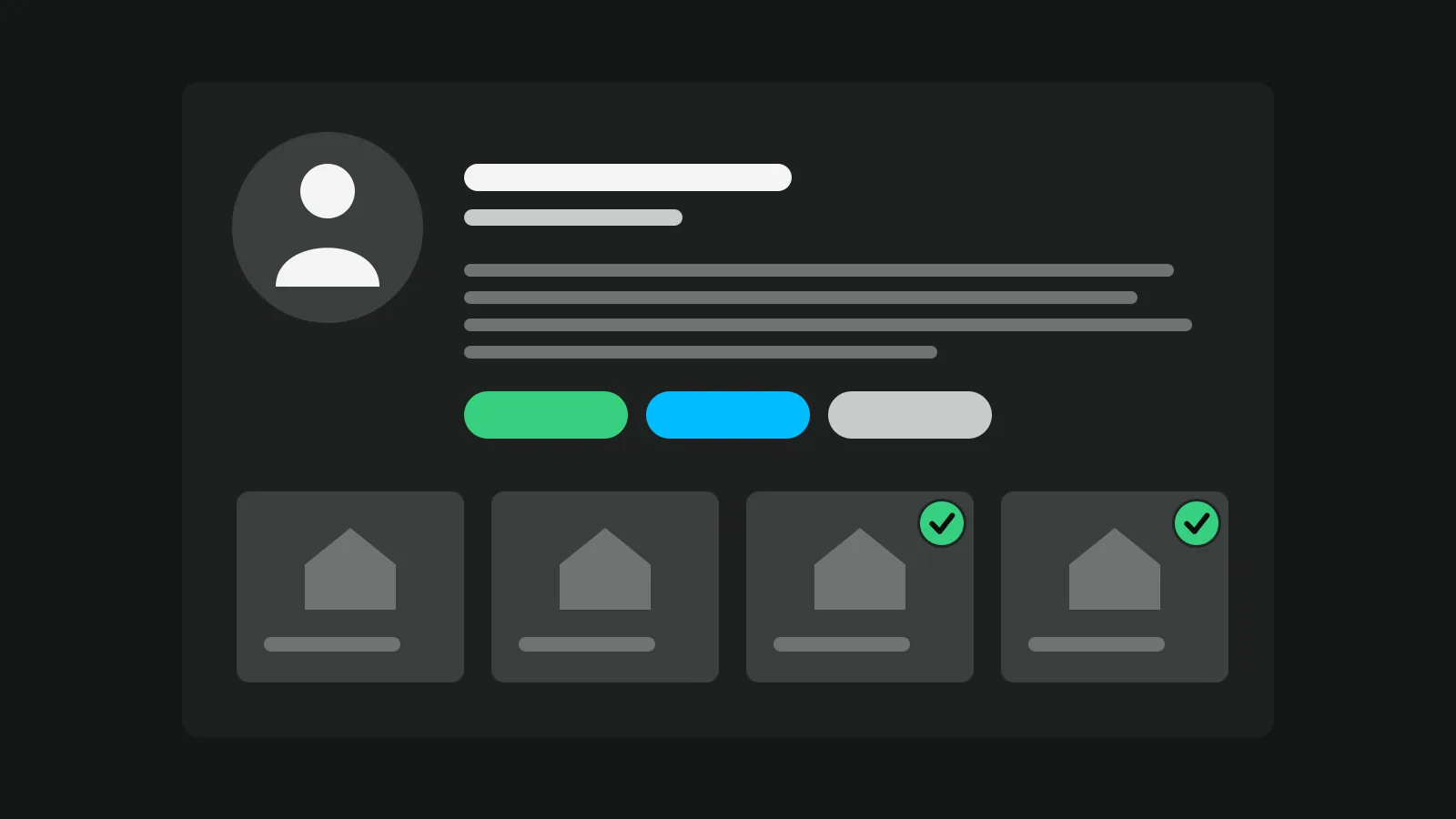
Behind the card's QR code, a Vistura public profile at vistura.app/@yourname works on every plan. It shows your "Agency", "Role", "Area you work in", phone, WhatsApp, "Public email" and "Website" with one-tap buttons, then "Properties you can visit now" and, apart, "Recently sold". Only what you fill in is shown. Make its QR code with the free tool's "Link" option and the code stays valid for as long as your profile stays public.
A card lasts longer than your listings
Here is the test: in six months, will the code on the card still open something useful? A code that points to a portal listing opens an error page once the listing is removed. That is the card's worst moment, in the hands of someone who kept it.
Every Vistura tour has its own "Tour QR code" on every plan, made for shop windows, flyers and for-sale boards, and its short address never changes. When you mark the home as sold, the same link shows that it sold and a "Looking for something similar?" form that reaches your leads and, with your public profile on (it is by default), up to six of your homes still for sale. Scans are counted as "QR code" visits; on Pro the tour's statistics show them apart from property portals, WhatsApp and social networks. Every new account starts with 14 days of Pro, no card needed: see the plans.
Checklist before you order
- Your name as licensed and a title you are allowed to use.
- The brokerage shown the way your state wants it.
- Your licence number, if your state or country requires it.
- One phone number and one email.
- One QR code that opens a page you control, with a line that says what it opens.
- The QR code at least about 2.5 cm wide, scanned on two phones from the printed proof.
- All text inside the printer's safe area.
- The spelling of your email and website checked by someone else.
The card's job is the next step: save the number, see the homes. Make that step work for as long as the card sits in someone's wallet.
Frequently asked questions
Do I need my license number on my business card?
It depends on where you are licensed. California asks for your eight-digit licence number on business cards; the Texas commission answers "No" for advertising in general. Other states set their own rules, so check your state's real estate commission before you print.
What should the QR code on a real estate business card open?
A page you control that stays useful for months, such as a profile with your contact details and your homes. Save a single listing's tour for cards you hand out at that home.
How big should a QR code be on a business card?
As a rule of thumb, at least a tenth of the distance it is scanned from. For a card held 25 to 30 cm from the phone, that is about 2.5 to 3 cm (1 to 1.2 in). A contact-card code holds more data, so print it larger.
Can I put REALTOR® on my business card?
Only if you are a member of the National Association of REALTORS®. Members write it in capitals, set off from the name by punctuation, and never as a description of the job.