Real Estate Branding: Personal Brand, Kit and the Rules
Real estate branding as one system: personal, team or brokerage brand, the visual kit, your voice, the naming and ad rules, and where it must match.

Real estate branding is what people recognise and remember about you before they ever call: your name and area, how your listings look, how you write and where they keep seeing you. It matters early. In Zillow's 2025 report, 59% of sellers hired the first agent they spoke with, so the choice often happens before the first conversation. Here is how to set it up as one system: whose brand it is, what it stands for, the kit, the voice, the rules on names and ads, and every place it must match.
What real estate branding includes
A real estate brand is the set of choices that makes your work recognisable and trusted in the same way everywhere. It has six parts:
- Positioning: who you help and where.
- The name: your own, a team name or your brokerage's, and the handles and domains that go with it.
- The visual kit: colours, type, photo style and the real estate logo.
- The voice: how you write and speak.
- The proof: reviews, results and the story in your real estate agent bio.
- The places it shows: signs, cards, profiles, listings, tours, emails.
A slogan is optional. If you want one, these real estate slogans show how to write it.
Personal brand, team brand or brokerage brand?
Before you design anything, settle whose brand leads. Otherwise you may find that your brokerage or your state does not allow what you already printed.
| Model | Fits whom | What leads on a sign or ad | What to check first |
|---|---|---|---|
| Brokerage first | New agents, franchise offices | The brokerage's name and look | The brokerage's brand guide |
| Personal brand under the brokerage | An agent known in one area | Your name and photo, with the brokerage's name always present | Your state's rules on the broker's name, size and placement |
| Team brand | Two or more licensees who sell together | The team name, with the broker's identity alongside | Your state's team-name rules |
Real estate team branding has the most rules attached. California is one example. The Department of Real Estate's FAQ (revised December 2021) says a team name "must include the surname of at least one member of the team, in conjunction with the words 'group,' 'team,' or 'associates'". It may not use "broker", "real estate brokerage" or any term suggesting "a real estate entity independent of the responsible broker". The DRE gives "Smith Real Estate Team" as an acceptable name. The responsible broker's identity must appear "as prominently and conspicuously as the team name": a team name in 12-point type needs the broker's name in 12 points or more (California DRE).
The statute behind it covers ads "including print or electronic media and 'for sale' signage", which must show the team name and "the name and license number of at least one of the licensed members of the team" (Cal. Bus. & Prof. Code § 10159.6). States differ: check your state's real estate commission before you print or post.
If you work under a franchise, its brand guide decides most of this for you; the logo guide covers franchise rules.
One piece of advice for teams: agree in writing who keeps the team name, the social handles and the domain if you or a team member move to another brokerage. It is an easy conversation before anyone leaves and a hard one after.
Positioning: who you help and where
Positioning is the sentence people repeat about you. Write it with this formula:
"I help [who] [buy or sell] [what kind of home] in [area], by [how you work]."
Two examples, written for this guide:
- An agent in Austin who helps first-time buyers find condos near downtown, by explaining every cost before the first viewing.
- An agent in a coastal town who helps owners sell older family homes, by handling repairs and staging before the photos.
Personal branding for real estate agents starts with a choice you can keep. Pick an area you can cover in person and a client you already serve well. A niche is a promise, and you need proof that you keep it: sales in that area, reviews from those clients, local knowledge you can show. That proof belongs in your agent bio.
The visual kit: colours, type, photos and templates
Your real estate brand identity is the kit people see before they read a word.
| Element | The rule | Where it shows |
|---|---|---|
| Colours | One main colour, one accent, two neutrals, written down as hex codes | Signs, cards, posts, tours, website |
| Type | Two typefaces at most: one for headings, one for text | Card, website, social images, flyers |
| Logo files | A horizontal version, a square mark and a one-colour version | Everywhere; the square mark on social profiles |
| Photo style | The same light, camera height and editing on every listing | Listings, portals, social posts |
| Headshot | One current photo, used everywhere, replaced everywhere on the same day | Profiles, cards, email, signs |
| Templates | One for listing posts, one for the last frame of a reel, one for the email signature | Social media, video, email |
Test the main colour three ways before you commit: on top of a photo, as text on white, and printed in one colour on a sign. A colour that fails one of these will look wrong somewhere you cannot easily change.
For the logo files and sizes, the real estate logo guide has the full list. For a consistent photo style, see the guide to real estate photo editing. A buyer who scrolls a portal should recognise your listing before reading your name.
Your voice: how the brand sounds
Choose three words for how you sound, for example "plain, local, quick", and write down what they rule out. "Plain" rules out jargon; "local" rules out generic lines that could describe any town.
| Do | Don't |
|---|---|
| "Three bedrooms, ten minutes' walk to the station" | "Stunning dream home" |
| "Offers by Friday at 5 pm" | "Don't miss this incredible opportunity" |
| "The kitchen faces west: sun until evening" | "Bathed in natural light" |
| "Call or text me, I answer the same day" | "Reach out at your earliest convenience" |
These are examples; write your own in the same spirit. For listing wording and the words fair housing rules ask you to avoid, see the guide to the listing description.
Use the same voice in captions, emails, your voicemail greeting and WhatsApp messages. A brand that sounds warm on Instagram and stiff on the phone feels like two people.
Names, handles and ads: the rules in the US
These rules are given as of November 2026. NAR's rules bind its members; state rules bind every licensee.
The REALTOR® term. "Only members of NAR can call themselves a REALTOR®", and an individual's name must be separated from the term by punctuation, as in "J.J. Jones, REALTOR®" (NAR).
Handles and domains. NAR's legal guidance on usernames says the rules are "the same regardless of the medium". Online, capitals and the ® may be dropped and punctuation is not needed, but descriptive words and place names are out. "janesmithrealtor" is acceptable; "chicagorealtor" and "top_chicago_realtor" are not (NAR, July 2009). That guidance is old, so check NAR's current Membership Marks Manual before you register a handle. By the same logic, a handle like "yourcityrealtor" falls on the wrong side of the line.
Advertising. NAR's 2026 Code of Ethics (NAR) sets three standards that touch your brand:
- 12-5: no advertising "without disclosing the name of that REALTOR®'s firm in a reasonable and readily apparent manner";
- 12-9: firm websites show "the firm's name and state(s) of licensure";
- 12-10: the true picture in advertising "includes Internet content, images, and the URLs and domain names they use".
State rules. The California team rules above are one state's example. Texas rules on the size of the broker's name are covered in the logo guide.
Outside the US, regulators set their own rules on names, licence numbers and ads. Check them before you print.
Where your brand must match
| Place | What must match | The rule to check |
|---|---|---|
| Sign and rider | Name, broker's name, colours | Your state's size and placement rules |
| Business card | Name, photo, colours, broker's name | Your state's rules: see real estate business cards |
| Website | Name, colours, photo, voice | Firm name and states of licensure on firm sites (SoP 12-9); see real estate agent website |
| Google Business Profile | The same name and photo | See Google Business Profile |
| Social profiles | Name, handle, photo, bio link | NAR's handle guidance |
| Reels and posts | The last frame: name, brokerage, contact | SoP 12-5; see real estate reels |
| Listing photos and MLS media | Photo style | Your MLS may restrict branding in listing media: check its rules |
| 360 tours | Logo, colours, the cover over the tripod | Brokerage name where the tour is an ad |
| Email signature | Name, photo, colours, brokerage | SoP 12-5 |
| Reports to sellers | Logo, colours, voice | Your brokerage's guide |
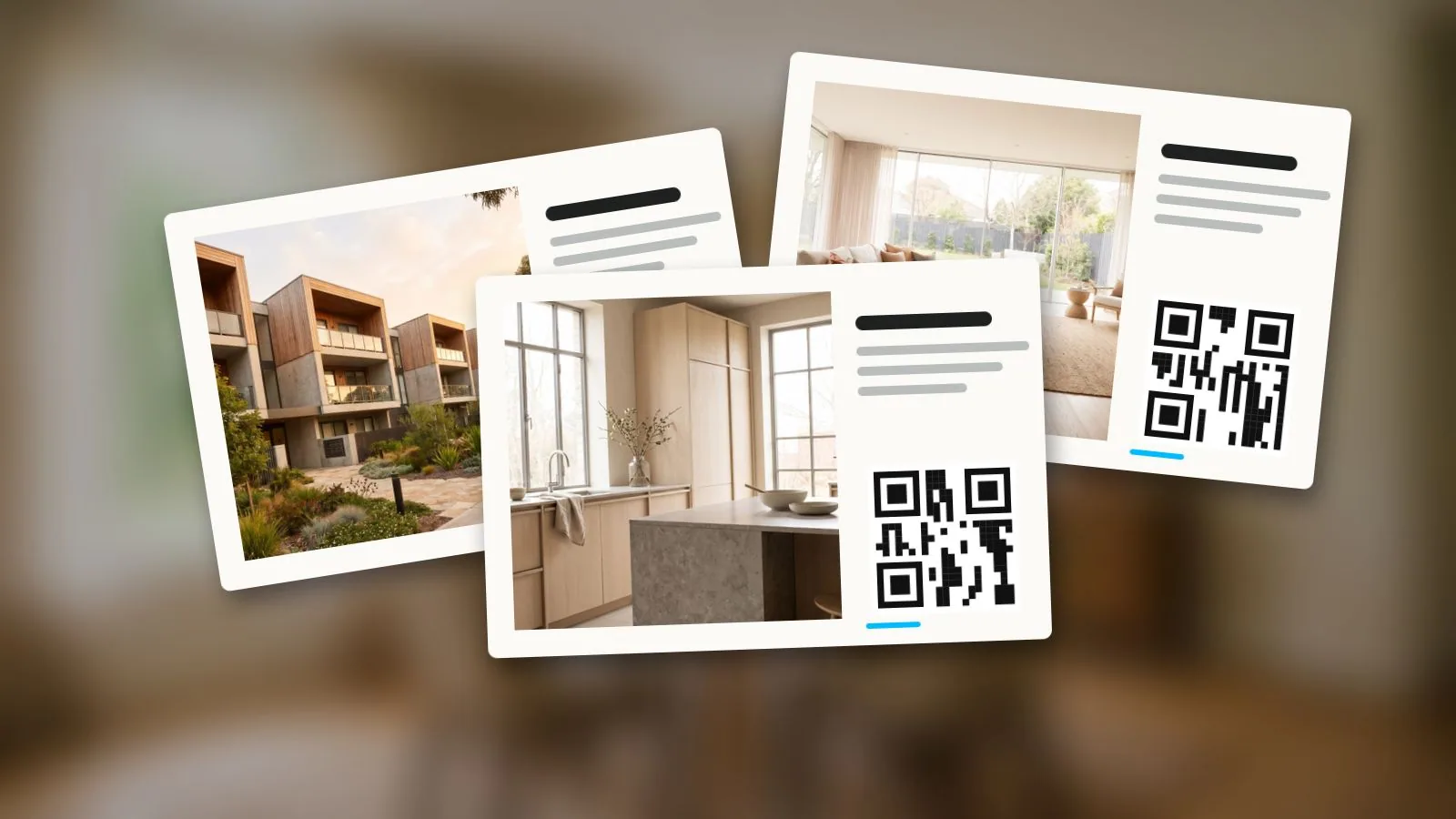
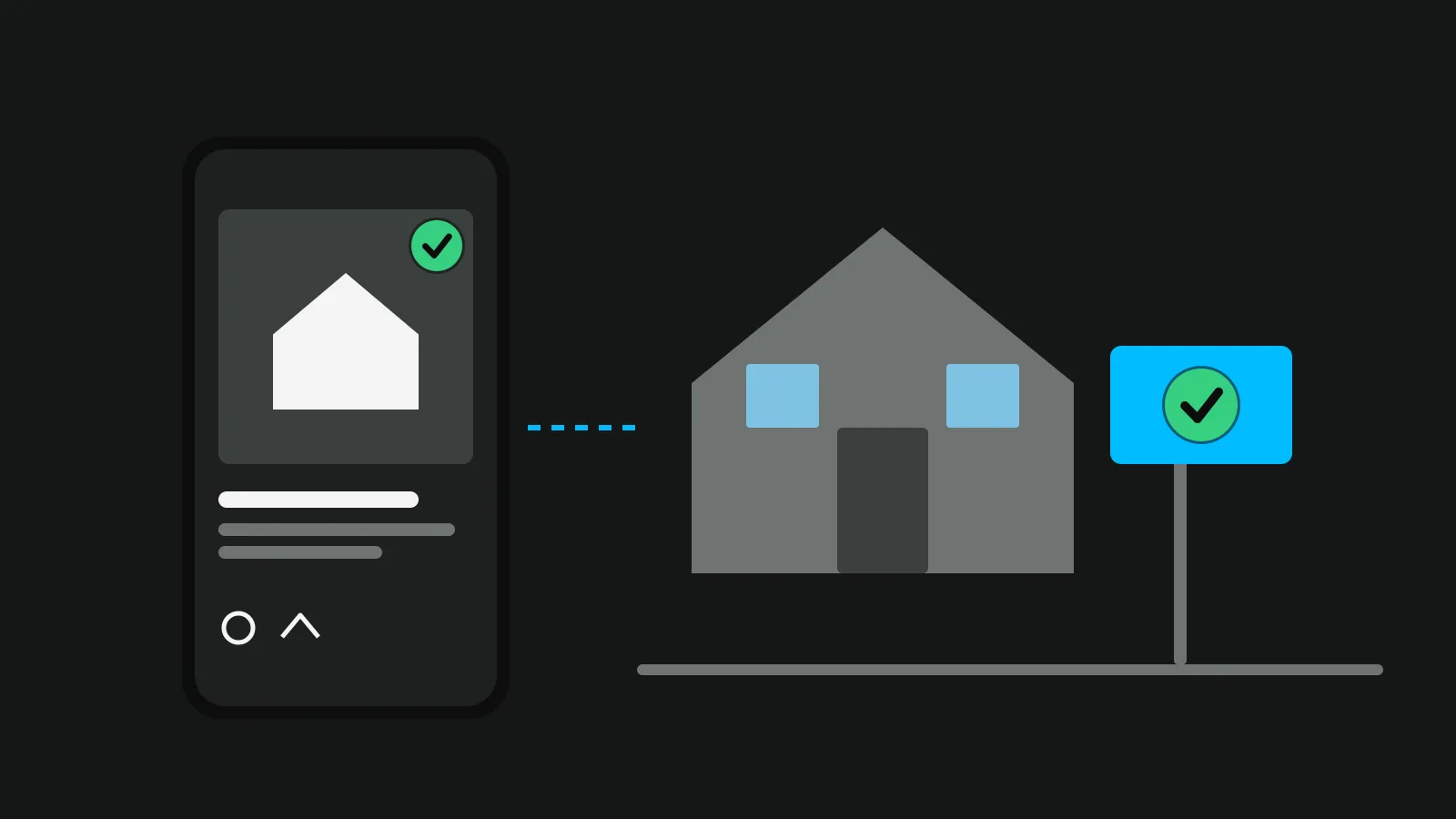
| QR codes | The mark in the centre and where it leads | It must open what the sign or card promises |
The online places count as much as the sign. In the same Zillow report, 36% of sellers found their agent through online channels, up from 15% in 2018.
On Vistura Pro, your brand reaches what a tour sends out: the tour itself ("Your logo and colours, no Vistura badge"), the "Images for social media" and the "Vertical reel" in your logo and colours, a disc with your logo over the tripod (Hide the tripod, then Logo), your logo in the centre of your QR codes (choose "Your logo" under "Centre of the QR code"), and your name and logo on the owner report you send the seller. A new development can have a look of its own: "With Pro, each tour can have a logo and colours of its own." Every new account starts with 14 days of Pro, with no card, so you can see your brand on a real tour before you choose a plan (see the plans).
One brand for a whole team
When ten agents each make their own version of the logo, the brand becomes ten brands. A team needs a shared kit, one set of templates and one person who approves changes.
On Vistura Business, the "Team brand" is "Shown on every team tour, by every agent, instead of each agent's own brand", and tours can open on your own address, for example tours.youragency.com. Tours belong to the agency: "When an agent leaves, their tours and open leads go to whoever you choose."
Check your brand every quarter
Twenty minutes every three months keeps the brand from drifting:
- Search your name and your team name. Open every profile side by side: same photo, name, handle and colours?
- Scan your QR codes on a sign, a card and a post. Does each one open what it promises?
- Ask every new client "How did you find me?" and write the answer down.
- Retire old templates and headshots everywhere on the same day.
- Check the broker's name and license details on your newest ad, post and reel.
One link makes the first check easier. Your Vistura public profile at vistura.app/@yourname is "One link with all your properties: for your business card, email signature and shop window", with its own QR code, on every plan. For where branding fits in your year, see the real estate marketing plan.
Frequently asked questions
Should I brand myself or my brokerage?
It depends on your brokerage's rules and on where you are in your career. New agents and franchise offices usually lead with the brokerage brand; an agent known in one area can lead with a personal brand, with the brokerage's name always present. Read your brokerage's brand guide and your state's ad rules first.
Can I use REALTOR® in my Instagram handle?
Only if you are an NAR member, and only next to your name: NAR's guidance accepts handles like janesmithrealtor but not place or descriptive words like chicagorealtor. That guidance dates from 2009, so check NAR's current Membership Marks Manual.
What does a team name need in California?
According to the California DRE's FAQ, the surname of at least one team member with the word group, team or associates, no word suggesting an independent brokerage, and the responsible broker's identity shown as prominently as the team name. Check the DRE's current rules before you print.
How many brand colours should a real estate agent use?
A simple rule of thumb: one main colour, one accent and two neutrals, written down as hex codes. Fewer colours are easier to keep consistent on signs, cards, posts and tours.