Real estate agent website: what it needs and your options
What a real estate agent website needs: the pages, five ways to get one with costs as read on providers' pages, the rules to follow, and contacts that work.
A real estate agent website has three jobs: show the homes you sell, prove you sell them, and make it easy to contact you from a phone. You can start with a free profile page and grow into your own domain later. What should decide the choice is who owns the address and the contacts, not the design.
What a real estate agent website must do
Show the homes. Every listing should open on a phone and show the photos, the price, the facts and, ideally, a tour. A buyer who arrives from a portal, a sign or a message is already holding a phone.
Prove you sell them. Homes you sold, reviews from real clients, and the area you work in. A visitor who does not know you is asking one question: does this agent sell homes like mine, here?
Make contact one tap away. Phone, WhatsApp or text, and a short form. If a buyer has to hunt for a number, they go back to the portal.
The test for every choice in this guide: if a buyer opens your site from a portal or a sign on their phone, can they see the home and reach you in under a minute?
The pages an agent website needs
A small real estate website with these pages beats a big one with none of them done well.
| Page | What goes on it | Note |
|---|---|---|
| Home | Who you are, where you work, your current homes, one contact button | Keep the contact button visible on a phone |
| Listings | One page per home: photos, price, the facts, a floor plan if you have one, a tour | How to put the tour on the page: embed a virtual tour on your website |
| Sold | Homes you sold, kept online | Your track record (see below) |
| About | Your story, your area, your licence details | Our guide to a real estate agent bio covers the text |
| Area pages | One per neighbourhood you really know | Optional; only worth it if you write something local |
| Contact | Phone, WhatsApp, email, a short form | With its privacy line |
| Legal footer | Licence and broker details where required, privacy policy, and outside the US the legal notice | See the rules below |
If you searched for a "realtor website", the advice is the same. REALTOR® is a trademark of the National Association of Realtors, so use it only if you are a member.
Your options, from free to custom
You do not have to choose once and forever. Many agents start with a free page and add a domain when they are ready. The costs below are as read on each provider's own page on 12 November 2026.
| Option | What you get | Who owns it | Cost as read (12 Nov 2026) |
|---|---|---|---|
| Portal profile (in the US, Zillow's agent profile) | Your listings and reviews on the portal | The portal owns the page and the visitors | Free, according to Zillow's agent profile page |
| Brokerage page | A page on your brokerage's site | The brokerage | Ask your broker, and ask what happens to it if you move |
| Free profile page | Your homes with a tour each, sold homes, one-tap contact | You, on the provider's address | Free (see below) |
| Website builder (Wix, Squarespace) | Your domain, your design; no MLS feed unless you add one | You | Squarespace served prices in euros: from €12 a month (Basic) to €69 (Advanced) billed annually, with one year of free domain registration on annual plans. Wix showed $17.77 (Light) to $159.77 (Business Elite) a month on yearly plans, noting "Prices and currency vary by location" |
| Real estate platform with IDX (AgentFire as one example) | An IDX feed of MLS listings, lead capture, real estate templates | You, under the platform's terms | AgentFire: setup $800, $2,750 or $6,500 one-time, then Pro $165 or Plus $215 a month; "Built in IDX is included", but "IDX fees do not include MLS pass-through fees" |
| Agency-built custom site | A design made for you | You, if the contract says so | No price published; ask for a quote with domain, hosting and IDX listed apart |
Check the price shown in your own country before you compare: builders change prices and currency by location.
Three questions decide between them:
- Who owns the domain? Buy it in your own name. An agent in Austin who moves brokerage keeps her domain, her links and her search history; a page on the old brokerage's site stays behind.
- Do you need the whole MLS, or only your homes? IDX lets buyers search every listing on your site. If you mainly show your own, a page per home is enough.
- Who updates it every week? A site with last spring's listings does more harm than no site.
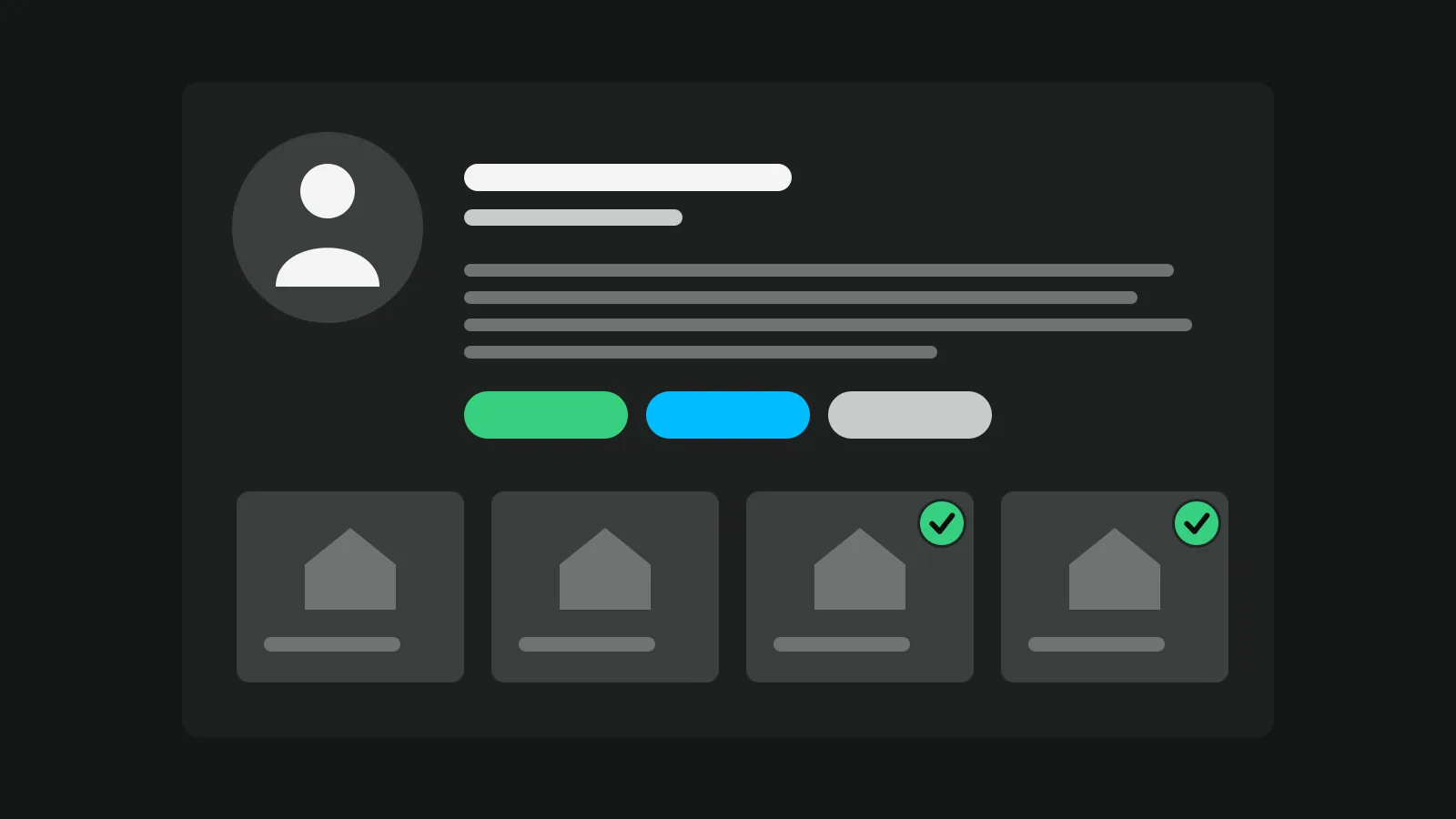
A free profile page is the quickest start. On every Vistura plan you get a public profile at vistura.app/@yourname with your photo, "About you", "Agency", "Role", "Area you work in", "Phone", "WhatsApp", "Public email" and a link to your "Website". It lists "Properties you can visit now", each with a 360 tour, and keeps "Recently sold" apart, so your sold homes stay on the page as a track record. Visitors reach you in one tap, and a profile with a public tour or a bio is open to search engines. Use it as your first page while you build a site, and then next to that site as the page of your tours.
Listings and tours on your own site
IDX or your own listings. IDX shows MLS listings on your site, under your MLS's rules. Those rules set what each listing must show, so read them before you go live. If you only show homes you list, one page per home is enough, and you control every word on it.
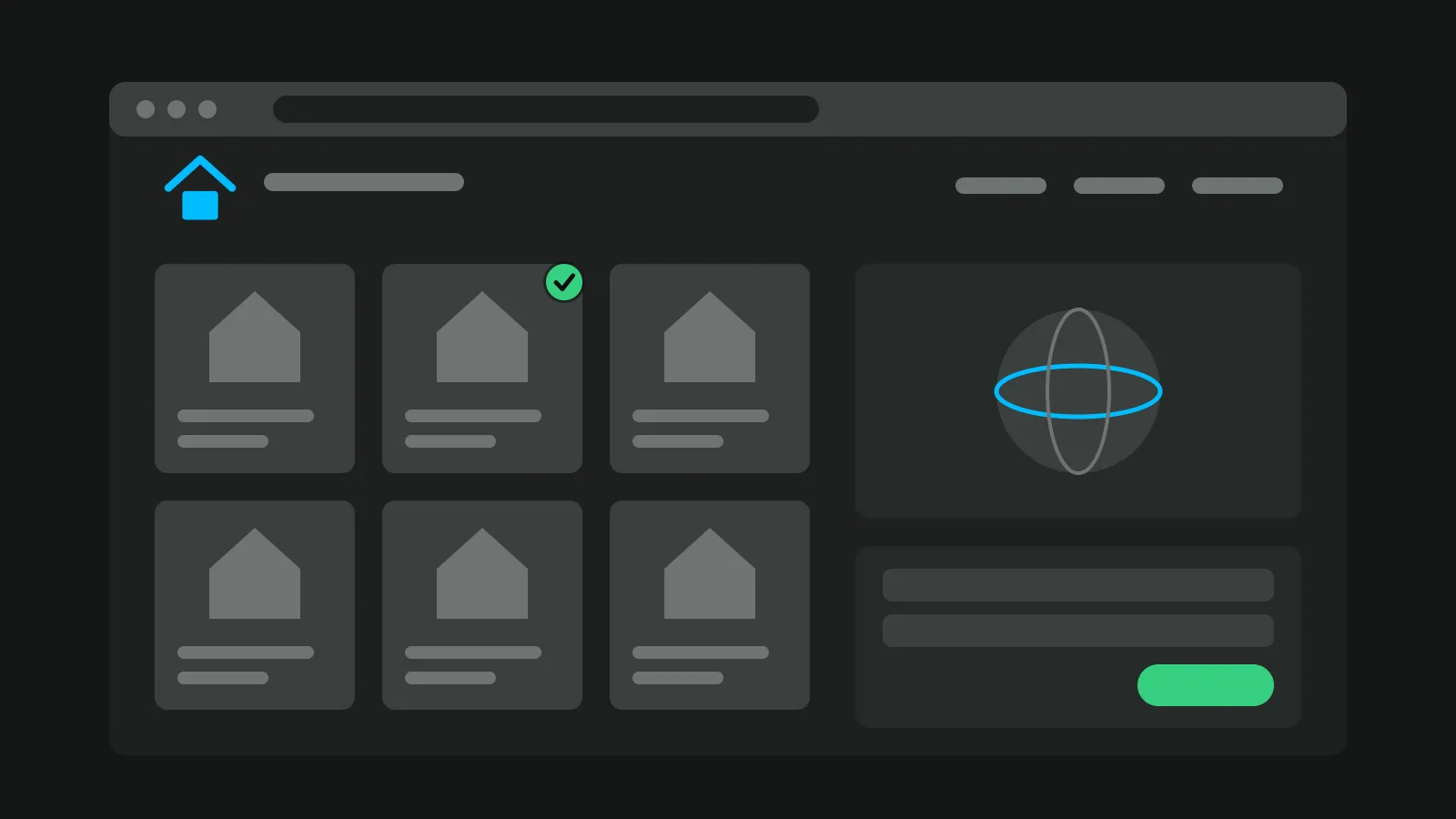
A tour on every listing page. Photos let a buyer scroll; a tour lets them walk from the hall to the garden and decide whether the home is worth a viewing. Put it near the top of the page, under the main photo. Our guide on how to embed a virtual tour on your website has the steps for each builder.
When the home sells, keep the page. Mark it sold and keep it under "Sold" as proof, or send the old link to your current homes. A dead link from an old portal post or a shared message loses the visitor; a sold page shows you closed.
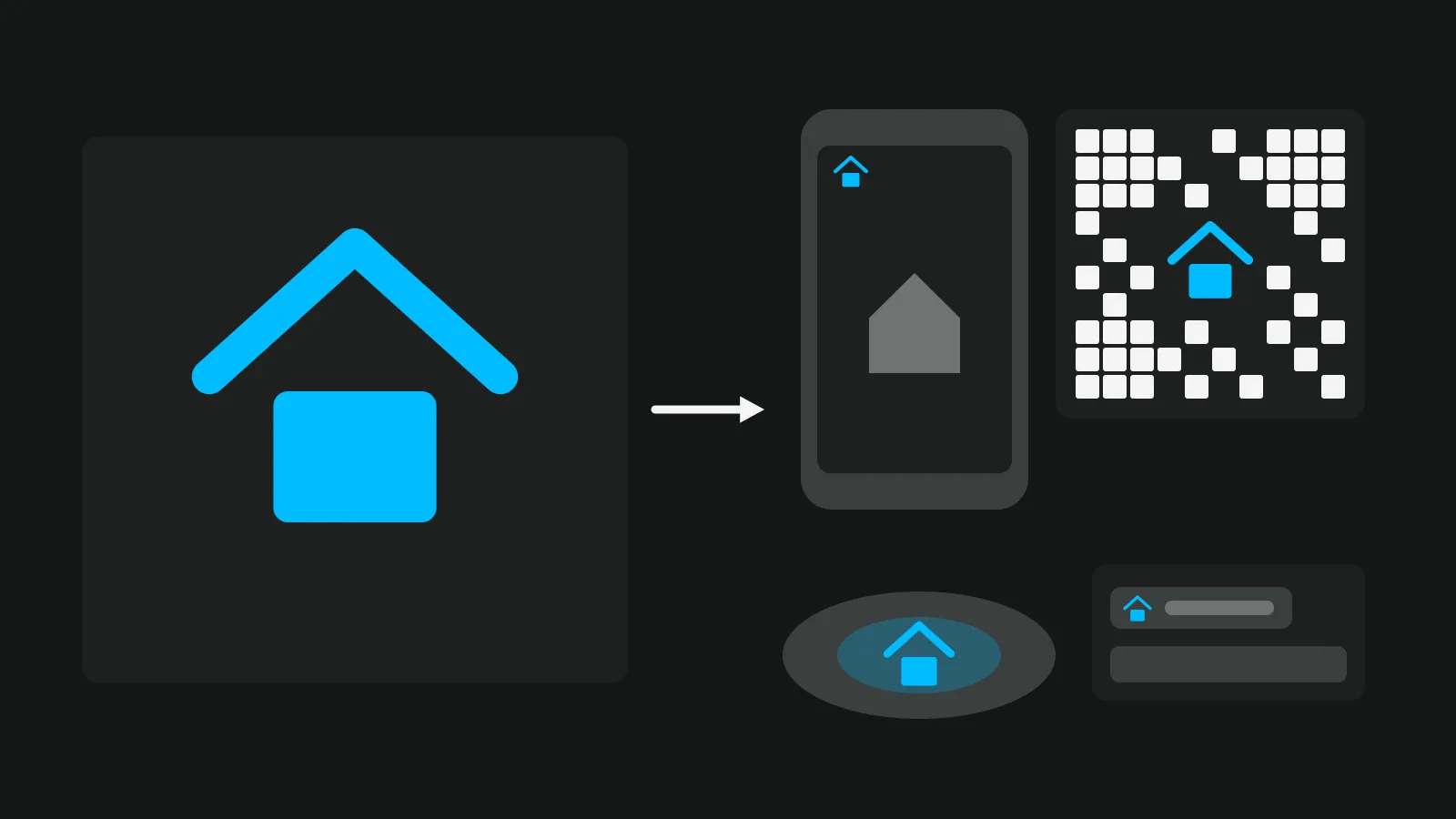
Every Vistura tour has an embed code on every plan: open "Embed on a website" and "Paste this code into the property page on your website". The agent card, WhatsApp and the contact form travel with the tour, so a buyer can write to you from inside the tour on your own site, and the request lands in your Leads. "Mark as sold" keeps old links working: they lead to your profile. On Pro, your logo and colours replace the Vistura badge, and your statistics show visits from "Your website (embedded)" apart from portals, QR codes and social media.
Contact that works, and the privacy line
Put one-tap phone and WhatsApp (or text) at the top of every page on mobile. Then a form with three fields: name, phone or email, and the message. Keep it that short: you can ask the rest when you call back.
Answer fast. Our guide on real estate lead follow-up covers what to say and when.
Next to the form, say who receives the data and why. In the UK and the EU this is not optional: GDPR article 13 asks you to give that information "at the time when personal data are obtained", including who you are, how to contact you, the purpose and who receives the data (Regulation 2016/679). The ICO calls it the right to be informed: "being open with people and providing them with clear and concise information". In the US, check your state's privacy law and your broker's policy.
Do not add a newsletter box that signs people up without asking. Ask, separately, and only if you will really send something.
What the law asks on the site
This is not legal advice. Rules as read on 12 November 2026; ask your broker or your regulator.
- California. 10 CCR 2773 lists "Websites owned, controlled, and/or maintained by the soliciting real estate licensee" among the materials that must show your eight-digit licence number and your responsible broker's name, in type "no smaller than the smallest size type used" in the material.
- Texas. TREC says "each broker and sales agent must provide a link on its homepage to the IABS Form", in a "readily noticeable place on the homepage", in at least 10-point type, labelled "Texas Real Estate Commission Information About Brokerage Services" (or "TREC Information About Brokerage Services" in at least 12-point). The current IABS form is effective 1 January 2026 (TREC).
- IDX displays. Your MLS's rules decide what each listing shown by IDX must carry.
- Other states. Check your real estate commission's advertising rules.
Outside the US, the rules often sit in general business and e-commerce law rather than in real estate law. Here is what six countries ask a business website to show.
| Country | What the site must show | Source |
|---|---|---|
| Germany | An Impressum: name and address, fast electronic contact including email, the supervising authority where the activity needs official approval, the register and number, the VAT ID | § 5 DDG |
| France | Mentions légales: identity, address, email, phone, RCS registration, VAT number, the host, and for a regulated activity the authority that granted the authorisation; an agent's maximum fees, and the RCS and SIREN on each property offer, website included | Service Public, justice.fr |
| Spain | An aviso legal: name, address, email, register data, the authorisation and supervising body where needed, the NIF; in Catalonia, the AICAT badge, which carries the agent's register number, "en cualquier tipo de publicidad que realice el agente" | LSSI art. 10, Generalitat |
| Portugal | The mediation company's name and licence (AMI) number in its advertising and "toda a atividade externa" | Lei 15/2013, art. 13 (2013 text) |
| Italy | Name, address, email, the REA number, the authority where the activity is licensed, the partita IVA | D.Lgs. 70/2003, art. 7 |
| Netherlands | Full and trade name, visiting address, email and phone; the KVK number and VAT ID when you sell services online | Ondernemersplein |
In these countries, keep the legal notice on your own site, and link your profiles and tour pages from it.
Checklist before you publish
- The domain is registered in your name.
- Every listing opens on a phone and has a tour.
- Sold homes stay online as proof.
- One-tap phone or WhatsApp on every page.
- A short form with its privacy line.
- Licence and broker details where your state asks for them.
- Outside the US, the legal notice in the footer.
- Your Google Business Profile links to the site.
An agency that wants its tours on its own address can connect a subdomain on Business ("Your own domain (tours.youragency.com)"). The tours then open on that address over HTTPS, and its home page shows the agency's logo, its bio and its public tours under "Properties", with no Vistura name on it. Link it from the agency's main site, next to the legal notice. Every new account starts with 14 days of Pro, with no card: see the plans.
Start where you are: a profile page today, your own domain when you are ready, and the address and the contacts in your name from the first day. For where the site fits in the rest of your marketing, see our real estate marketing plan.
Frequently asked questions
How much does a real estate agent website cost?
From nothing to several thousand dollars. A portal profile is free, a website builder costs a monthly fee plus your domain, and a real estate platform with IDX adds a setup fee and a higher monthly fee. Check each provider's price page in your own country, as prices and currencies vary.
Do I need IDX on my real estate website?
Only if you want buyers to search the whole MLS on your site. If you mainly show your own listings, one page per home is enough and costs less to run. If you add IDX, your MLS's rules apply.
Does my licence number have to be on my website?
In some states, yes. California lists websites a licensee owns, controls or maintains among the materials that must show the licence number and the responsible broker's name. Check your state's real estate commission for its own rule.
Can I use a free profile instead of a website?
As a first page, yes: it can show your homes, your sold ones and your contacts. Where the law asks for a legal notice on your business pages, keep that notice on your own site and link the profile from there.