Cost to sell a house: what the owner keeps after closing
What it costs to sell a house in the US, who pays what, a worked net proceeds sheet, the taxes that can follow, and how agents use it at a listing appointment.

The cost to sell a house is what comes off the sale price before the owner sees any money: commissions, transfer taxes, title and escrow fees, repairs or credits, and then the mortgage payoff. There is no honest single percentage, because commissions are negotiated, transfer taxes change by state, and the mortgage balance is the owner's own. The figure that matters to an owner is the net. Below is a worked net sheet for a made-up $450,000 sale, the lines you should fill in, the tax that may come afterwards, and how to use the sheet at a listing appointment. This article covers the US.
A net sheet for a $450,000 sale
The percentages and fees below are invented to show the sum. They are not market rates.
| # | Line | Who decides it | Amount |
|---|---|---|---|
| Sale price | $450,000 | ||
| 1 | Listing broker, 2.5% in this example | Listing agreement | −$11,250 |
| 2 | Buyer's broker, if the seller agrees to pay, 2.5% here | Negotiation with the seller | −$11,250 |
| 3 | State excise tax: Washington's 1.1% band | State | −$4,950 |
| 4 | Title, escrow and recording | Local quotes | −$1,800 |
| 5 | Repairs or a credit after inspection | Negotiation | −$3,000 |
| 6 | Mortgage payoff | Lender's payoff statement | −$210,000 |
| Net to the owner, before any tax on the gain | $207,750 |
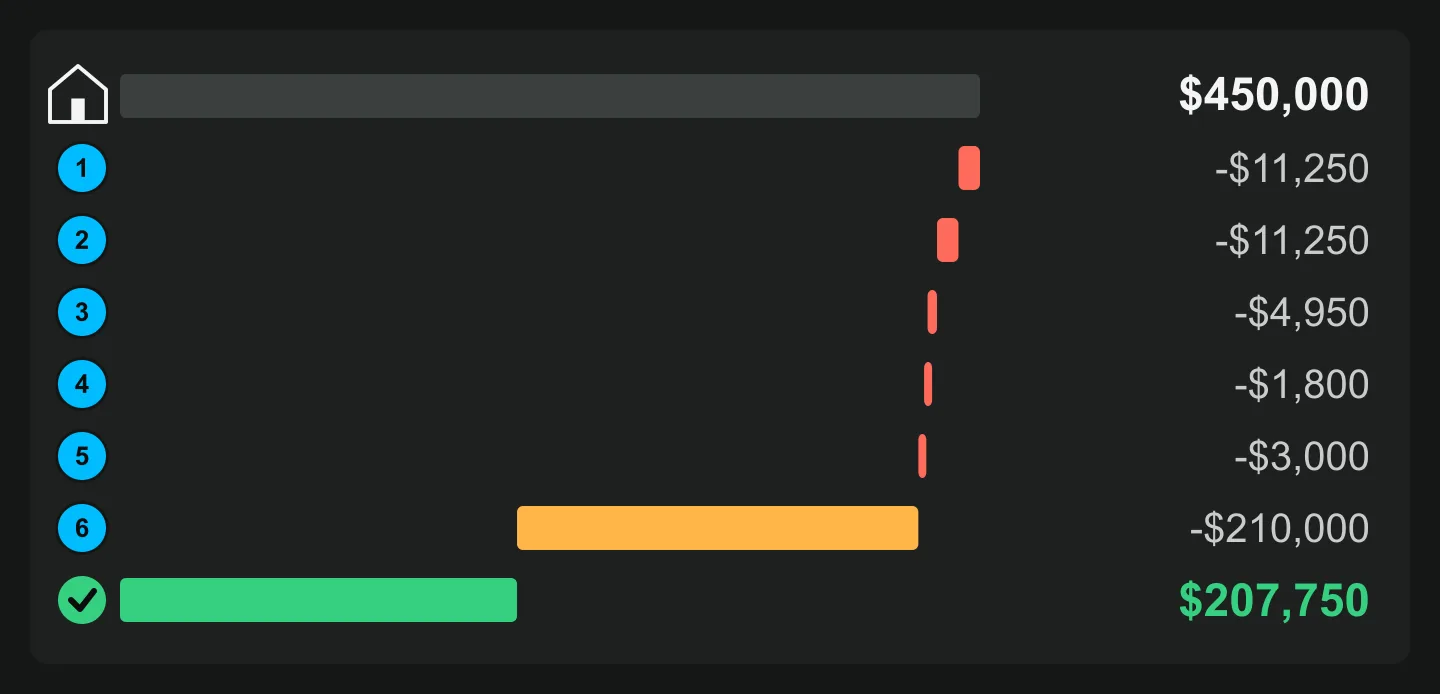
Lines 1 and 2 add up to $22,500, and that part is yours to explain. The free commission calculator splits it between agencies and shows the "Seller's net from the sale" before other costs, and "Copy as text" pastes it into your email.
Commission: say it before they ask
NAR's own settlement FAQ (updated 5 September 2024) says that broker commissions "are not set by law and are fully negotiable", and that members acting for sellers must disclose this in conspicuous language. They must also disclose and get approval for any payment the listing broker will make to a buyer's representative. The same FAQ says offers of compensation can't go on an MLS, while offers off the MLS and buyer concessions on it remain possible.
In practice, write line 2 as a decision for the owner, not a fixed cost. Show the net with it and without it, and explain how you would market the home in each case. An owner who sees the choice in writing will trust the rest of your sheet.
Transfer tax: use the state's own page
No national number exists. Look it up for that address. Washington shows how much detail you may need: its Department of Revenue (read 6 November 2026) lists graduated state rates from 1 January 2027, starting at 1.1% on the portion up to $551,000, adds local tax on top, and says "Usually, the seller pays this tax, but if they don't, the buyer is responsible". Line 3 above uses only that first band for a sale after that date, and leaves out the local part, so a real sheet there would be higher.
For other states, ask the title or escrow company for a written estimate. Put its name on the sheet.
What can come after closing: tax on the gain
This part of the bill comes months later, when the owner files. The IRS Topic 701 (reviewed 12 October 2026) says a seller may exclude up to $250,000 of gain, or up to $500,000 for most married couples filing jointly, if they owned and used the home as a main home for at least 24 months of the last five years.
Publication 523 (2025) subtracts selling expenses from the price to reach the "amount realized": commissions, advertising, legal fees and other costs to sell. That's why the owner should keep every invoice from your sheet. State taxes are separate. You are not their tax adviser, so give them the page number and send them to a preparer if the gain may exceed the exclusion, if they have rented the home out, or if they lived in it for less than two years.
Money that leaves before and after the closing table
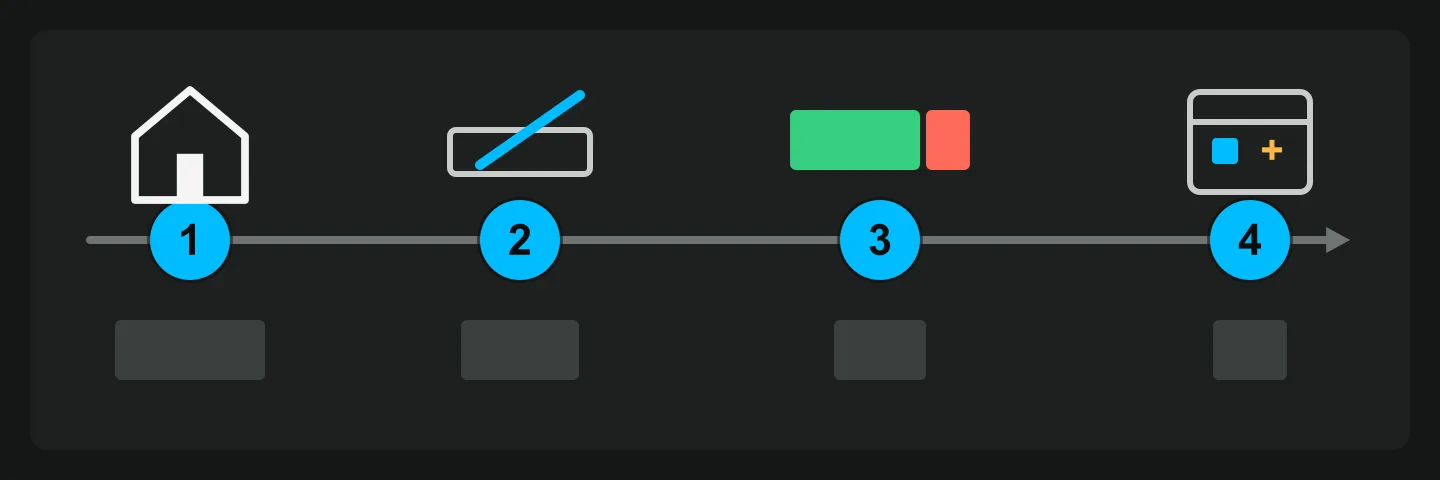
Owners often picture one bill on closing day. It helps to say that spending starts before the home goes on the market, and only the closing costs come from the proceeds. Someone who needs cash for repairs in March and gets paid in June wants to know that now. Also tell them to expect prorated property tax and HOA dues, and to ask the lender for a written payoff that shows any interest to the closing date.
The sheet in your listing appointment
Most owners ask about price, and then want to know how much they will walk away with. So bring the net sheet filled in with their mortgage balance and the title company's estimate. Show three prices: your suggested list price, a lower one and a higher one. A price drop of $10,000 takes about $9,400 from a net of $207,750, because the commissions and the tax fall with it: not much in percent, a lot to the owner. That makes a calm conversation about price possible.
Then move on to what you do for that commission. Show a 360 tour of another home on your phone: buyers walk through every room from a link. On Pro, the owner report shows the tour's visits, time, where people came from, most seen rooms and contact requests, with your note and your brand. Our guides on how to get real estate listings and the listing presentation cover the rest of that meeting.
Frequently asked questions
How do I calculate net proceeds from selling a house?
Start from the sale price, and take off commissions, transfer taxes, title and escrow fees, repairs or credits agreed with the buyer, and the mortgage payoff. Tax on the gain, if any, comes later and is separate.
Does the seller have to pay the buyer's agent?
No rule says so. Commissions are negotiable and not set by law. A seller may agree to it or offer concessions, and the listing agreement should say what was agreed.
Are selling costs deductible?
IRS Publication 523 takes selling expenses such as commissions and legal fees off the sale price when working out the gain. That reduces the gain, and it is not a deduction from other income.
Who pays transfer tax, the buyer or the seller?
It depends on the state and the contract. Washington says the seller usually pays its excise tax, and the buyer is responsible if the seller does not. Check the state and county, and read the contract.