Coming Soon Real Estate: 2026 Rules, Options and Trade-offs
Coming soon real estate for agents: NAR's 2025 seller options, what starts the one-day MLS clock, what studies say about price, and a campaign plan.
In coming soon real estate, a home is announced before it is fully on the market: the seller has signed, but showings, portals or both are held back for a short time set by the local MLS. Below are the four ways to sell before (or without) full exposure under NAR's current rules, what starts the one-business-day clock, what the studies say about price, and a campaign that stays inside the rules. Rules as read on 15 November 2026; your MLS's rules decide, and this is not legal advice.
Coming soon, off-market, pocket, office exclusive: what each term means
Four words get mixed up in conversation:
- Coming soon listing: a status some MLSs offer for a home that is signed but not yet active. What it allows (showings, portals, days on market) is set by each MLS.
- Off-market listing: an industry word for any home sold without being marketed to the public.
- Pocket listing: an older industry word for a listing the agent keeps "in the pocket", shown only to chosen buyers or agents.
- Office exclusive listing: NAR's term for a listing filed with the MLS but shared only inside the listing firm. It existed before 2025, and NAR's 2025 policy kept it.
The key point: "coming soon" is not one national status. In a statement of 20 March 2026, NAR says its "MLS policies provide each MLS with the flexibility to establish local rules". In the same piece, Andy Woolley of CoStar estimates that "about 80% of MLSs already offer a 'coming soon' option".
"Pocket listing" and "off-market" are not NAR categories. NAR's two exempt listing categories are the office exclusive, already in its model MLS rules, and the delayed marketing exempt listing, created by its 2025 policy.
One more distinction: an exclusive right-to-sell agreement is a type of listing contract with the seller. It is not an office exclusive.
The rules in 2026: Clear Cooperation and the 2025 seller options
The Clear Cooperation Policy (CCP) was adopted in November 2019 and put in place by MLSs in May 2020. The policy text says the listing broker must submit the listing to the MLS "within one (1) business day of marketing a property to the public". Public marketing "includes, but is not limited to, flyers displayed in windows, yard signs, digital marketing on public facing websites, brokerage website displays (including IDX and VOW), digital communications marketing (email blasts), multi-brokerage listing sharing networks, and applications available to the general public." NAR's FAQ, last updated 27 May 2025, says CCP "remains unchanged and in full effect".
Multiple Listing Options for Sellers took effect on 25 March 2025, and MLSs had to put it in place by 30 September 2025 (NAR policy page). It added the delayed marketing route and made a signed seller disclosure a requirement for both it and the office exclusive. Here they are side by side, from the FAQ, NAR's office exclusive and pre-marketing guidance of 9 July 2026 and its one-to-one guidelines of 21 May 2026:
| Route | Filed with the MLS? | Other agents can see it? | Showings? | IDX and syndication? | Your own marketing? | Seller signs? |
|---|---|---|---|---|---|---|
| Coming soon status | Depends on your MLS | Depends on your MLS | Often not; depends on your MLS | Depends on your MLS | Depends on your MLS | Depends on your MLS; NAR says "additional local disclosure requirements may also apply" |
| Delayed marketing exempt listing | Yes | Yes, "so they can inform their consumers, arrange showings, and/or submit offers" | Yes; an MLS cannot prohibit them | No, for a period your MLS sets | Yes, "in any manner consistent with the seller's needs and interests subject to applicable law", yard sign included | Yes |
| Office exclusive | Yes, it "may require submission under local MLS rules" | Only agents in your firm | Only through your firm | No | No public marketing at all | Yes |
| One-to-one broker talk about an office exclusive | No filing for the talk itself | Only the one agent | No; an outside showing triggers CCP | No | No | Seller's informed consent |
For an office exclusive or a delayed marketing listing, the signed disclosure must cover three things (FAQ 29 and the July 2026 guidance): your professional relationship with the seller; the seller's acknowledgement of "the MLS benefits they are waiving or delaying", such as "broad and immediate exposure"; and the seller's decision. Your MLS may give you its own form.
The rules keep moving. In November 2025, NAR's board approved 18 MLS Handbook updates that hand several decisions to local MLSs (RISMedia, 17 November 2025). CCP and the 2025 options stayed: NAR's July 2026 guidance still applies both.
State law can also be stricter. NAR's July 2026 guidance says "some states such as Wisconsin, Washington, and Connecticut have enacted laws or are considering laws that require the public marketing of listings", and adds: "Check with your state license authority."
What starts the one-business-day clock
NAR's guidelines for one-to-one broker communication (21 May 2026) and the July 2026 guidance draw the line. Keep this list next to the phone.
Does not trigger CCP:
- A one-to-one conversation with one agent outside your firm, written or spoken, made "pursuant to the seller's informed consent and interests".
- Repeating that conversation with a different agent at a different brokerage, one at a time.
Triggers CCP (file within one business day):
- Sharing an office exclusive with several outside agents "through single communication or a single display on a multiple broker platform/network".
- An outside agent showing or touring the home.
- Negotiating or accepting purchase offers through an outside agent.
- The receiving agent passing the listing on.
- Any public marketing from the CCP list: a sign, a window flyer, a website, a social post, an email blast.
NAR adds that acting without the seller's consent "could result in a breach of fiduciary duties, license laws, and the REALTOR® Code of Ethics". When in doubt, ask your MLS before you post.
Is it good for the seller? What the studies say
The seller's question is price and time. The evidence disagrees, and most of it comes from companies with a stake in the answer. The Zillow, Bright MLS and Hayunga figures below are as summarised by RISMedia on 21 April 2026.
| Study | Data | Finding | Who published it |
|---|---|---|---|
| Zillow Research | Two years of pocket-listing sales with the same agent or office on both sides, homes sold on the MLS before | Sold for $4,975 less on average, $1.06 billion in total; bigger loss in the lowest price tier (3.1%) than in luxury (0.4%) | Zillow, a portal that argues for listings on the open market |
| Bright MLS | About 100,000 sales over six months in the mid-Atlantic | Office exclusives took 37 days longer to sell on average, with "no impact" on closing price after controls; about 90% ended up selling as Active or Coming Soon | An MLS |
| Compass (21 Feb 2025) | Its own 2024 sell-side sales | Pre-marketed homes "associated with" 2.9% higher close prices (95% interval 1.9% to 3.9%); accepted offer 20% faster once on the MLS; 13% vs 19% had a price drop | Compass, which says results "are likely to vary" |
| Redfin (13 Mar 2026) | A model, not sales | Inventory "could increase by 6%-12%" where sellers can use private and coming soon options | Redfin, which announced a partnership with Compass the month before |
| Darren K. Hayunga, University of Georgia | One Texas MLS, 20 years | Pocket listings sold at a 1.7% premium before CCP and lost it after | A working paper on SSRN, unpublished at RISMedia's press time |
The plain reading: the price effect is disputed and depends on who measured it. Bright MLS's data, the only one of these studies run by an MLS, shows a cost in time: 37 days longer to sell.
The costs to put in front of the seller:
- Fewer buyers see the home, so there can be fewer competing offers.
- Your MLS may handle days on market and price history differently for these routes (FAQ 9 to 11).
- The seller gives up "broad and immediate exposure", in NAR's words.
The benefits, named just as honestly:
- Privacy and safety. NAR's guidance lists "health, safety, privacy" among the seller's reasons.
- Time to prepare the home while buyers already hear about it.
- A way to test the price before a public price cut shows in the history.
Fair housing matters here too: research cited by RISMedia links pocket listings with segregation. A private phase must still be open to any buyer on equal terms, with nothing about who may buy.
A coming-soon campaign that stays inside the rules
An example: a seller moving for a new job wants two weeks to pack before strangers walk through. Here is the order to work in.
1. Explain the options and get the signature first
NAR's guidance is direct: "Explain all listing options to the seller". Do it at the listing presentation, with the table above. Use your MLS's form for the route chosen, and note in the file the date and the delay period your MLS allows.
2. Prepare in private
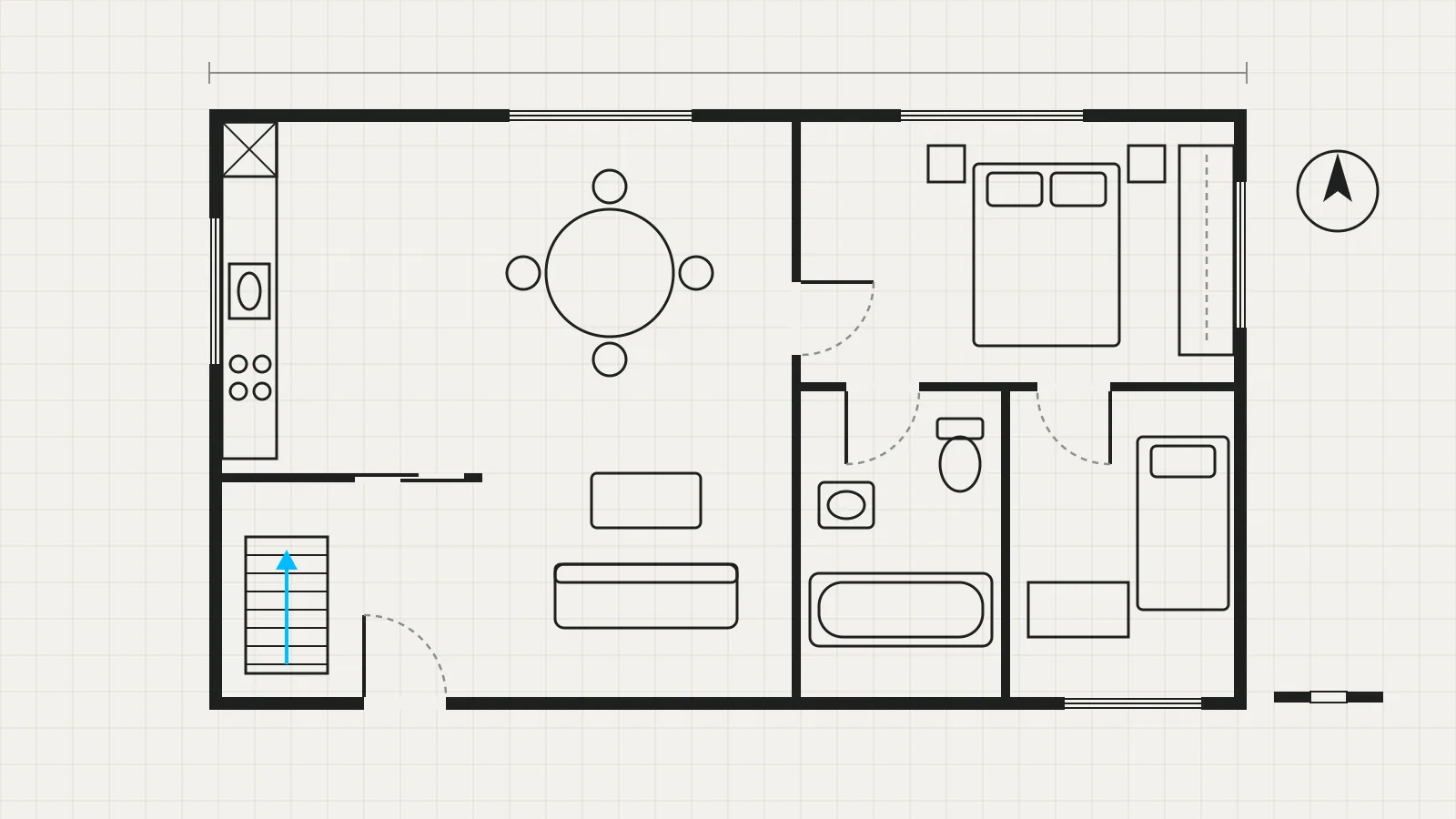
Photos, the tour, a floor plan and the description, all done before anyone outside the firm sees them. The guide on how to make a virtual tour covers the shoot.
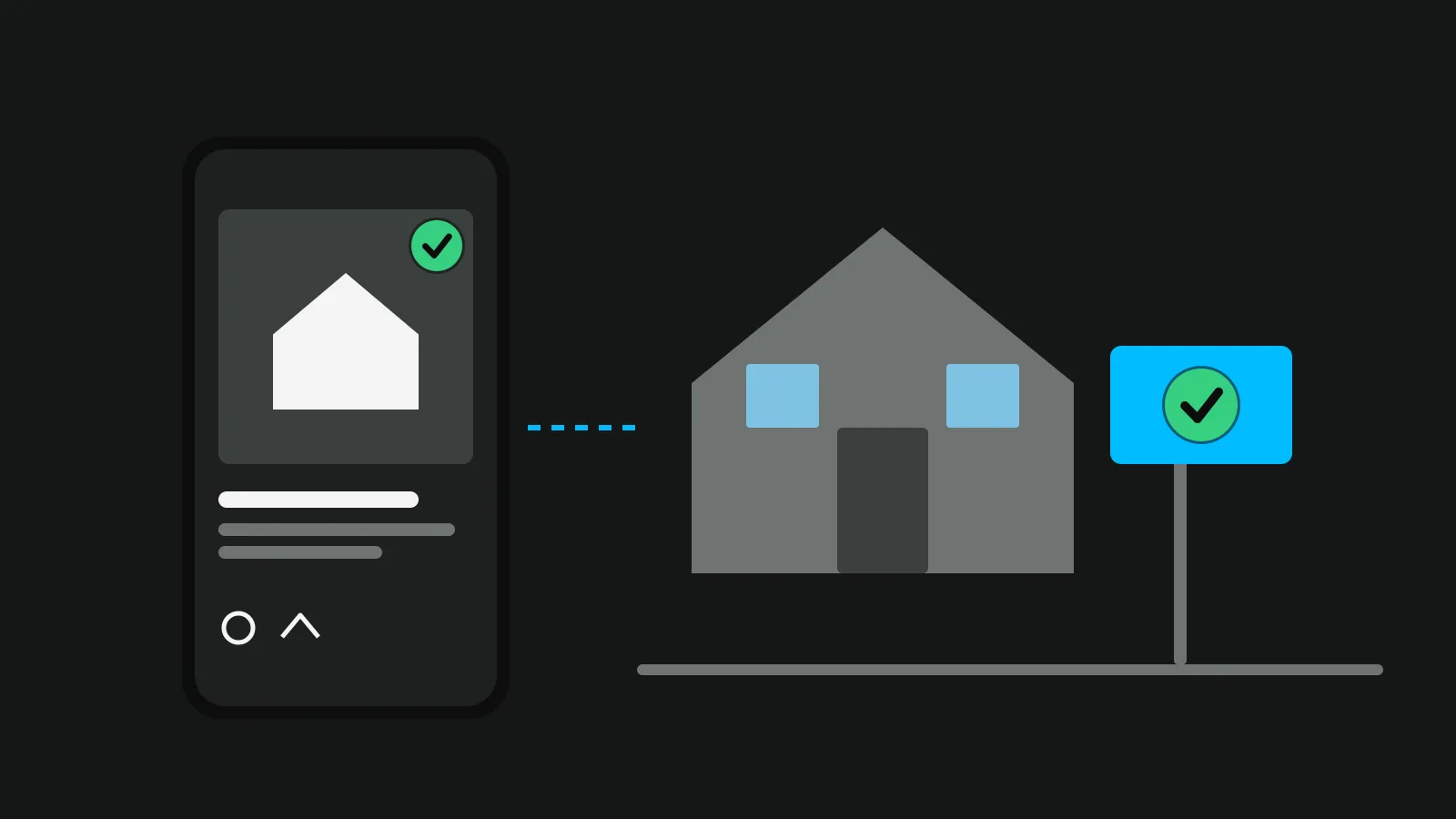
A new tour in Vistura starts as "Private" ("Only you can open it, when signed in."), and private tours do not take one of the 3 tours Free keeps online at a time, so you can build and check the whole listing before launch. Show the seller a preview on your screen. On Pro, "Only people with the link" lets the seller open it from home without it showing on your profile or on Google. On Business, "Password-protected" opens it to "anyone with the link and the password", and a private team tour opens only for people in your team, signed in. These settings control who can open the tour; they do not decide what counts as public marketing. Who you send the tour to does.
3. Decide what the announcement is
A sign rider, a social post, an email to your list or a page on your website is public marketing: the listing goes to the MLS within one business day, or before. The guides to QR codes on real estate signs and real estate social media post ideas cover the formats; the clock applies to all of them.
Say nothing in the teaser that the MLS entry will not also say: the price if your MLS needs one, and facts that match. The listing description guide helps you write them once.
4. If the seller chose an office exclusive
Share only inside your firm. Talk one to one with outside agents only with the seller's consent, and never let them show the home. Sending the tour link to a group of outside agents, or posting it in a shared network, is multi-brokerage sharing whatever the tour's setting says.
5. Launch day
Make the tour public the day the listing goes live, and follow the real estate marketing plan for the launch week that follows.
6. If plans change
Sellers pause. In Vistura, "Take offline" ("Goes offline without saying it sold.") keeps the link working: anyone opening it sees your contact and can leave an enquiry. "Put back online" brings it back when the seller is ready. Both are on every plan; an offline tour frees its place on Free, and putting it back takes one of the 3 places again (Pro has no limit).
Report back to the seller
The seller gave up exposure, so show them what the private or coming-soon phase produced: visits, enquiries, viewings and feedback.
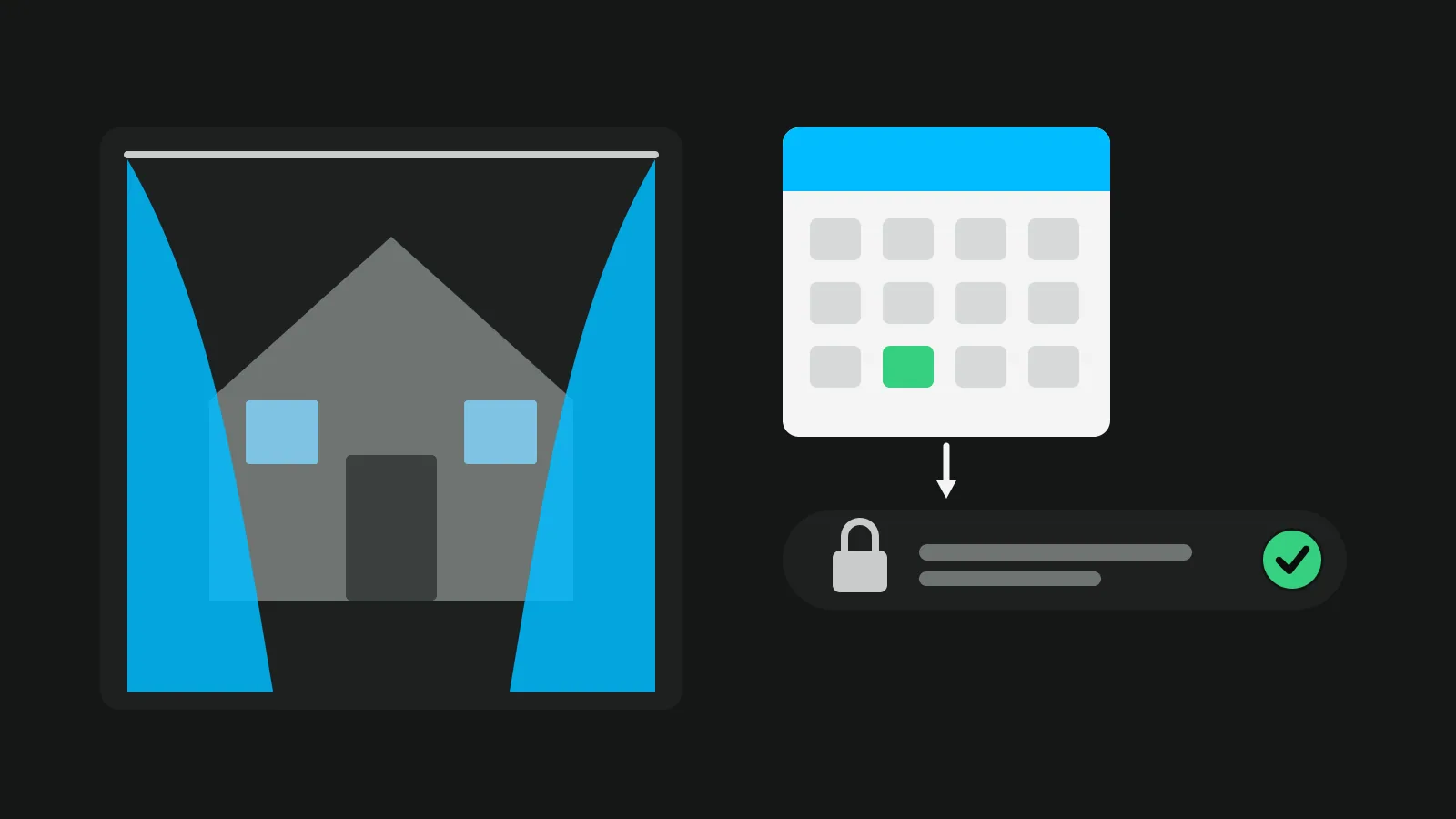
The Vistura "Owner report" gives the tour's visits and contact requests on every plan, as a PDF or by email with "Your note to the owner". On Pro it adds where visitors came from, the rooms they looked at most, time in the tour and your logo, and "Owner access" lets the owner follow the tour and its numbers themselves without ever seeing who the leads are. Also on Pro, once you set your weekly hours and switch booking on for the tour, buyers use "Book a viewing" to pick a free time in your calendar, and "Before you call" (shown on each lead as "Before getting in touch") lists the rooms the lead saw and the time in each room. New accounts start with 14 days of Pro, no card: see the plans.
Checklist before you say "coming soon"
- Your MLS's current rule for the route: status name, days allowed, showings.
- The seller's signed disclosure on file.
- Nothing public before the MLS entry, or the entry within one business day of the first public marketing.
- No outside showing of an office exclusive.
- State law checked with your license authority.
- The same facts in the teaser and in the MLS entry.
- Nothing about who may buy.
- Portals checked: some have their own rules for homes marketed privately first, and they changed in 2025 and 2026 (RISMedia, 18 March 2026), so read the portal's current page.
Conclusion
A private phase is the seller's choice, made with the costs in writing. Your job is to explain those costs and keep the clock.
Frequently asked questions
Can you show a coming soon listing before it is active?
It depends on your MLS. Some Coming Soon statuses allow no showings at all, while a delayed marketing exempt listing can be shown, because NAR's FAQ says an MLS cannot prohibit showings of it. Check your MLS's current rule before you book anyone in.
Is a delayed marketing listing the same as an office exclusive?
No. A delayed marketing listing is filed with the MLS and visible to other agents, with only IDX and syndication held back for a period your MLS sets, while you may still market it yourself. An office exclusive is shared only inside your firm and is not publicly marketed at all.
Does a coming soon post on social media count as public marketing?
Yes. NAR's Clear Cooperation Policy treats public facing websites and applications available to the general public as public marketing, so the listing must reach the MLS within one business day of the post. Your MLS may set its own Coming Soon rules on top of that.
Do off-market listings sell for less?
The studies disagree. A Zillow analysis found pocket listings sold for less, a Bright MLS study found no price effect but a longer time to sell, and Compass found higher prices for its own pre-marketed homes. Each study comes from a company with a stake in the answer.